
This article was co-authored by Caden Rosenbaum, Senior Tech & Innovation Policy Fellow at Libertas Institute.
Gov. Spencer Cox just reaffirmed the state’s “pro-human” AI strategy and announced major workforce investments.
Utah’s mental health chatbot legislation, for example, is a model for the rest of the country because it captures an honest accounting of the mental health benefits for patients, and creates transparency and privacy protections for mental health patients without compromising innovation. That approach stands in stark contrast to the mental health chatbot bill passed in Illinois that burdens innovation in spite of positive mental health outcomes.
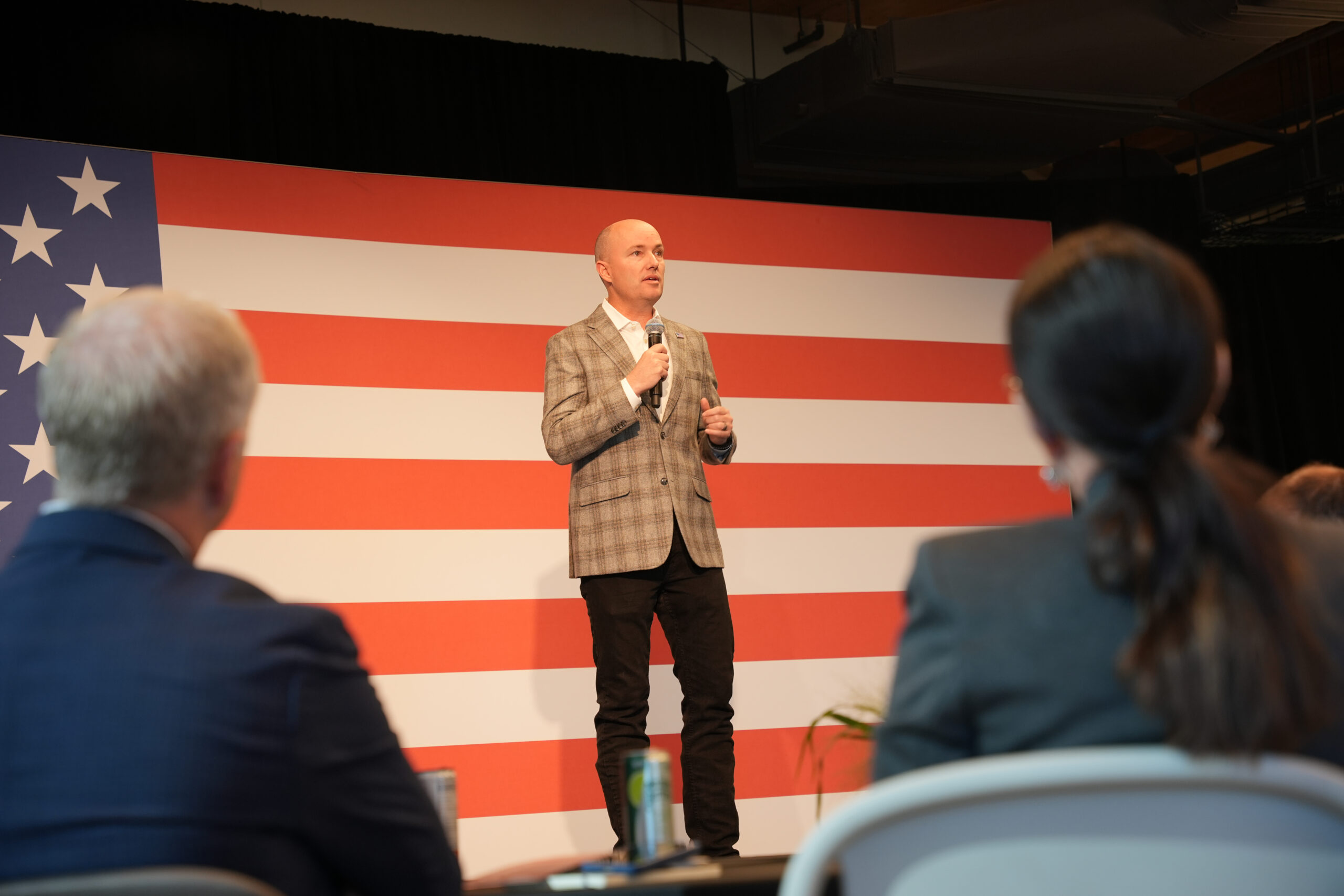
It’s no surprise that Governor Cox has doubled-down on the state’s commitment to these forward-looking policies, like enabling the thousands of civil servants in Utah’s state government workforce to cut red tape and streamline paperwork with AI tools.
However, just because the state is in the lead now does not mean it will stay that way. If Utah does not remain on the forward-looking path, focused on problem-specific and narrowly tailored AI regulation, the lead could be blown.
To secure that lead, Utah must continue to embrace the Governor’s vision for a “pro-human” AI strategy. This means staying committed to the same problem-specific, narrowly tailored approach that put the state ahead in the first place. If lawmakers keep their attention on removing barriers, improving service delivery, and avoiding overbroad rules, Utah will remain the country’s model for practical, pro-innovation AI legislation.