
How to Build an ADU in Utah
A complete guide to accessory dwelling units (ADUs), what’s allowed, how to get permits, and what Utah law says.
Nearly every Utah property owner with a single-family home can build at least one type of ADU. State law sets a framework for ADU legalization, while your city or county determines the specifics, including lot size, setbacks, and parking.
What Is an ADU?
An Accessory Dwelling Unit (ADU), also called a mother-in-law apartment, basement apartment, backyard cottage, or in-law suite, is a secondary living space on a property that already has a primary home. It has its own kitchen, bathroom, and sleeping area, functioning as a self-contained unit.
Utah has expanded ADU freedoms to give homeowners more flexibility and to ease the state’s housing affordability problems. As advocates for property rights and free market solutions, Libertas Institute has tracked and directly supported this expansion.
Three types of ADUs
- Internal ADU: Converting space inside your home’s existing footprint, such as a basement, upper level, or attached garage, into a self-contained unit.
- Attached ADU: Extending your home’s footprint with new living space that is attached to the primary dwelling, such as a wing addition.
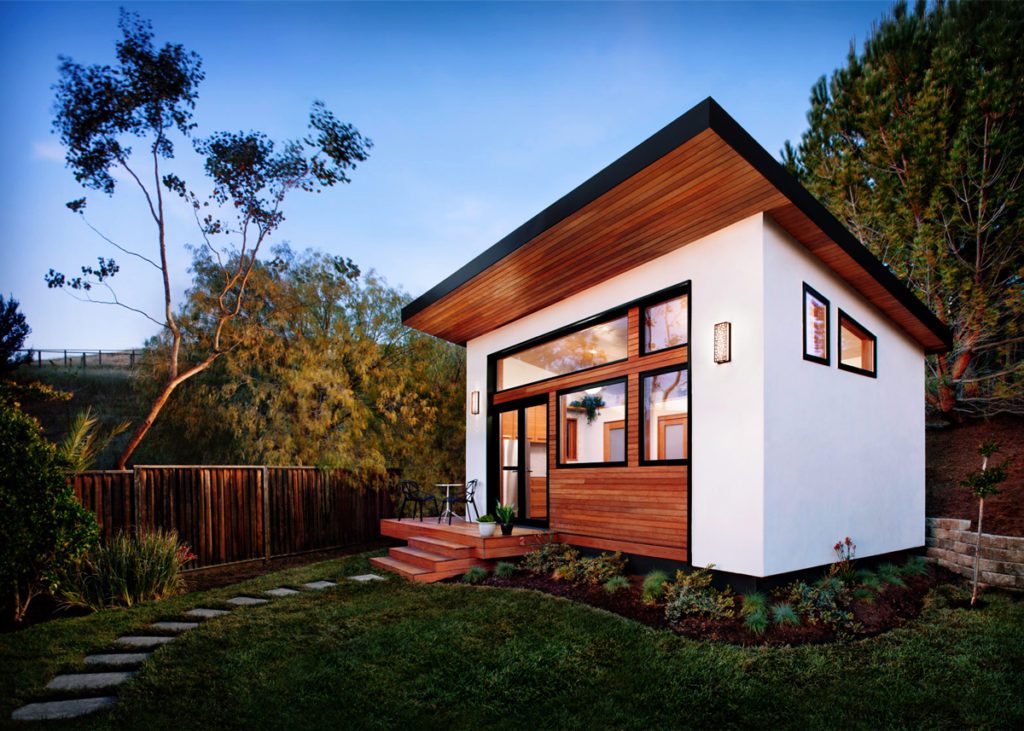
- Detached ADU: A fully separate building, such as a backyard cottage or a unit above a detached garage.
What Does an ADU Cost in Utah?
ADU costs vary widely, driven mostly by square footage, finish quality, and whether a new foundation or utility laterals are involved. Sweat equity can lower costs if you manage or do some of the work yourself.
| ADU Type | Typical cost range | Notes |
| Basement conversion | $40,000 – $90,000 | Least expensive; structure already exists |
| Garage conversion | $50,000 – $120,000 | Depends heavily existing state of garage and access to utilities |
| Attached addition | $75,000 – $200,000+ | New construction attached to home |
| Detached backyard cottage | $85,000 – $250,000+ | Full new structure; most expensive but most flexible and likeliest to command higher rents |
Application and permit fees are usually between $1,500 – $4,000, depending on your city’s fee schedule and ADU size. Impact fees may also apply to certain ADU types in some jurisdictions.
Utah’s Legal ADU Framework
State law limits how restrictive local ADU ordinances can be:
- Municipalities cannot ban ADUs outright, though they can set restrictions that effectively rule them out for some properties.
- You can almost certainly rent your ADU to long-term tenants, though short-term rentals (under 30 days) are regulated separately and often restricted.
- Where a city’s ordinance conflicts with state law, state law controls.
Cities may require
- Site plans, building permits, impact fees, and inspections
- Minimum lot size (within state limits)
- Maximum ADU height and size (typically no larger than primary home or ~1,000 sq ft)
- Setbacks from property lines and existing structures
- Additional off-street parking spaces
- Owner-occupancy of the primary residence (varies by city)
Cities cannot
- Impose unreasonable design standards
- Demand excessive off-street parking
- Require a public hearing for a permitted ADU
- Unreasonably delay in application review and permit issuance
- Require a separate utility connection or meter for an internal ADU
Step-by-Step Process
- Check your city’s specific ADU ordinance. Every Utah city handles ADUs somewhat differently within the state framework. Look up your city or county’s zoning code, or call the planning department, to learn the key requirements: minimum lot size, maximum ADU size and height, setbacks, parking, and whether owner-occupancy is required.
- Request an informal pre-application review (optional). A pre-application review helps you confirm eligibility, identify easements, and understand inspection and site-plan requirements before you submit formal plans.
- Submit your formal application. Most ADU projects require accurate site plans drawn to scale showing both existing and proposed structures. A designer or architect familiar with local requirements will almost certainly improve your plans and prevent revisions.
- Building Permit Issuance. You’ll often need separate electrical, plumbing, and possibly gas permits. These are typically pulled by your licensed contractors.
- Build and Pass Inspections. Construction proceeds in stages, with required inspections at framing, rough mechanical, and final completion. If you are tempted to skip permits and inspections, recognize that unpermitted ADUs can create serious problems when you go to obtain necessary insurance for occupants, when you sell the property, and if someone reports you.
- Obtain a certificate of occupancy. After passing final inspection, the city issues a certificate of occupancy. This is necessary for the unit to be legally occupied.
If your city denies your ADU or cites a requirement that seems to conflict with state law, it’s often worth simply going back to them with the relevant statute in hand. If that stalls, Libertas Institute’s can help you navigate what your next steps might be.
Frequently Asked Questions
Can I rent out my ADU on Airbnb or VRBO?
It depends on your city. Long-term rentals are broadly allowed for legal ADUs, but short-term rentals are regulated separately and vary significantly. Check your municipality’s short-term rental ordinance, since some require a separate license and strictly limit which properties qualify.
Does adding an ADU raise my property taxes?
Yes, typically. Adding livable square footage increases the assessed value of your property, which affects property taxes. The increase is usually modest relative to the rental income potential.
My city says I can’t build an ADU. What can I do?
It depends. Were you told your ADU wouldn’t work in a preliminary discussion, or did you receive a denial on a formally submitted application? Often these resolve easily, through a careful review of the city ordinance or state statutes, or by adjusting your site plan. If the denial rests on a lawful regulation you simply disagree with, your recourse is legislative: advocating for an ordinance change with your elected officials, which we can help you navigate.
Can I use my ADU for family members rather than as a rental?
Absolutely. ADUs are ideal for aging parents, adult children, or other family members.
There’s no requirement that you rent it. The same permit and building code requirements apply regardless of whether you rent it or not.
How long does the ADU permit process take in Utah?
It varies significantly by city. Salt Lake City and some larger municipalities have dedicated ADU fast-track programs. Smaller cities may take weeks or even a month for plan review. Factor this into your construction timeline.
Author: Lee Sands is the Local Government Policy Analyst at Libertas Institute, drawing on his research and entrepreneurial experience to inform and assist elected officials and the general public. He focuses on issues most relevant to local governments, such as land use, taxation, and business regulation. His work addresses the regulatory hurdles that matter most to families, small businesses, and entrepreneurs.
Published: June, 2026