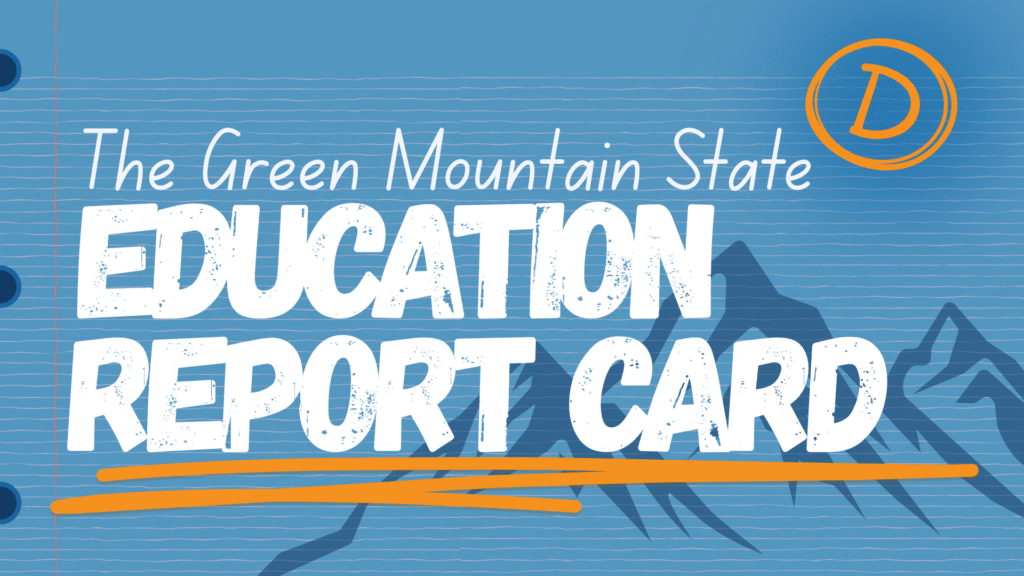
The Green Mountain State: Overall D
Vermont has real strengths on paper: light homeschool regulation and the oldest school choice program in the country. But a 2025 law shrank that program to about 18 eligible schools and locked every new school out for good, dragging the whole picture down.
Microschools — C-
Microschools are small independent schools, typically around 15 students, run differently from a traditional classroom and usually started by teachers from both public and private backgrounds. Vermont has no separate legal category for them, so a multi-family school operates as an independent school.
- No accreditation, licensing, or curriculum approval is required; a school can operate by filing a simple annual notice.
- Full state approval, with a site visit and financial review, is only needed to accept public tuition dollars.
- Zoning and building codes apply in full, with no exemption for small schools; a school founded after July 2025 can also never qualify for public tuition money under current law.
Improvements
- Preempt local zoning in all zones, residential, commercial, and agricultural, for schools under a set enrollment size.
School Choice Policy — D-
School choice covers a wide range of laws, not one program: charter schools, open enrollment, and public funding that follows a student to private tuition or homeschooling. A newer tool other states use is the Education Spending Account (ESA), letting families spend public dollars on tuition, curriculum, and individual classes. Vermont has none of that beyond one narrow, centuries-old exception.
- Vermont’s town tuitioning program, the nation’s oldest school choice program, pays tuition for students in towns without a public school to attend the public or independent school their family picks.
- A 2025 law limits eligible schools to those already serving a large share of tuitioned students in 2023-24, cutting the list to about 18 schools statewide and permanently barring any school founded after July 2025.
- Vermont has no charter school law and no ESA or voucher outside a tuitioning town, though public high schoolers can transfer to any public high school at no cost.
Improvements
- Repeal the rule locking schools founded after July 2025 out of tuition money forever.
- Create a law permitting charter schools to form and serve students.
Homeschooling — B-
Homeschooling today is more than one parent teaching from the kitchen table; many families lean on co-ops, online courses, or in-person classes as kids get older, chasing specialization a single classroom can’t offer. Vermont calls it home study, and a 2023 law stripped out much of what made the process a burden.
- Families now keep their own end-of-year assessment records at home instead of sending them to the state.
- Vermont requires no teaching credential for parents and no state approval of curriculum.
- Home study students can take up to two courses at their local public school and try out for sports and other extracurricular activities.
Improvements
- Drop the first-time disability-evidence requirement families must still submit before a new home study enrollment is approved.
Extra Credit: A Personalized Plan for Every Teenager
Every Vermont student in grades 7 through 12 works from a written, personalized learning plan built around their own goals. While still within the box, this idea and plan moves Vermont to the outer edge of standardization. Giving students a chance to personalize, even a little, is worth recognizing.
Helpful Links for Parents
- Home Study Enrollment Information
- Vermont Home Education Network
- Independent Schools Overview
- Flexible Pathways and Dual Enrollment
- Tuition Rates and Announced Tuition
This is part of a series where we review and rate education access in every state in the country. Get more information here.
Author: Jon England is the Senior Education Policy Analyst at Libertas Institute. He is a fourteen-year veteran of public schools. He taught both fifth and sixth grades, receiving Weber District’s E+ Team Award. He proudly homeschools his children with his wife.
Jon received his bachelor’s degree in elementary education from the University of Utah and a master’s degree in educational leadership from Western Governors University. He spent time in the Marine Corps and separated as a sergeant in 2006.
During his time in public schools, Jon increasingly understood the importance of parental empowerment in education. This increased understanding led him to join Libertas to provide educational freedom for families. Jon enjoys spending time with his wife and five children traveling, skiing, and playing games.
Published: July, 2026