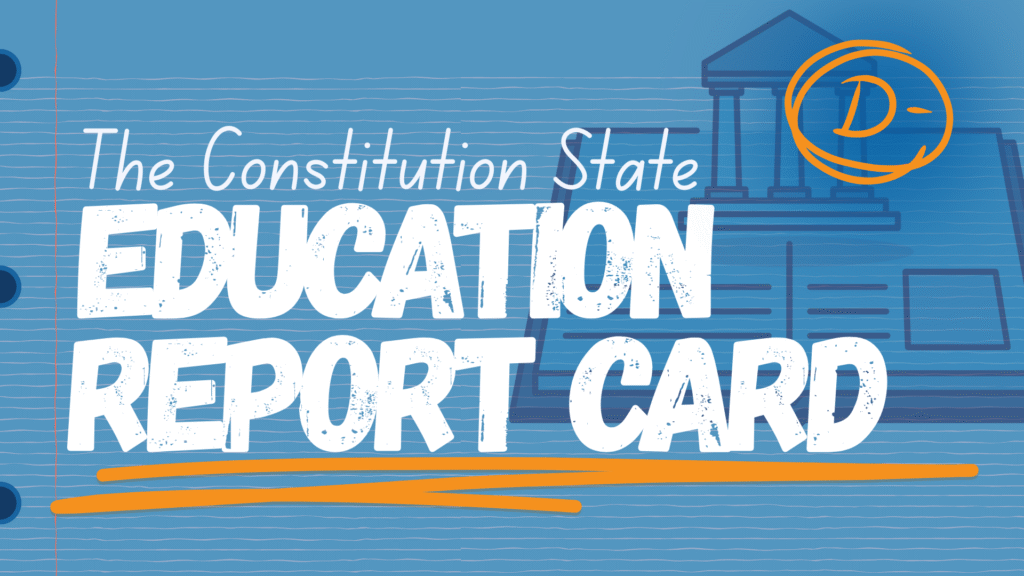
The Constitution State: Overall D-
Connecticut spent decades as one of the least regulated homeschool states in the country. Likely earning it a B+. However, a 2026 law has made Connecticut the most regulated, passing a drastic registry and process explained in the homeschool section. Add in a clunky open enrollment law, two tiered approval for charter schools, and a lack of school choice funding, Connecticut lands near the bottom of this series.
Homeschooling — F
Parents who want to homeschool their children must now wait 14 days before a withdrawal is granted and pass a background check. In addition, every new homeschooling family will have an automatic investigation opened by the Department of Children and Families. Connecticut is treating parents as suspect and criminal without evidence, making this the worst state in the country to begin homeschooling.
Prior to the major changes, Connecticut did not require registration or assessment from homeschooling families.
Homeschooling is more than a parent teaching their own children. Parent-led instruction is common early on, but many homeschoolers use co-ops, online courses, part-time enrollment, or in-person classes for a more specialized fit.
- Starting in 2027, new homeschool families must pass a background check and wait 14 days before they can withdraw their child
- Every homeschool withdrawal triggers an automatic report to the state’s child welfare agency
- Starting with the 2028-2029 school year, every family must file a mandatory form each October declaring how their child will be educated
Improvements
- Repeal the automatic child welfare report triggered by every homeschool withdrawal. Choosing to homeschool isn’t grounds for an investigation.
Microschools — C-
Microschools are small independent schools, typically around 15 students. Most are started by teachers from both public and private schools, and they operate differently from a traditional school.
- No distinct microschool category. Founders operate as an unregistered private school or a homeschool co-op under the same law covering individual homeschoolers.
- No teacher certification, curriculum approval, or standardized testing
- Co-op microschools fall under the state’s new 2027 homeschool oversight law, background check included.
Improvements
- Remove microschools from the homeschool law.
School Choice Policy — D
School choice covers charter schools, open enrollment, and public funding that follows a student to private school tuition or homeschooling. One of the newer tools is an Education Spending Account (ESA), covering tuition, curriculum, and individual classes.
- No ESA, voucher, or tax-credit scholarship programs
- Charter schools need both State Board of Education approval and a separate legislative funding vote to open
- Just 23 operating charter schools versus 123 in Utah with a similar population
- Open enrollment (called Open Choice) runs through regional service centers. Families can’t choose a specific district, and an unplaced student’s waitlist spot expires every year, forcing a full reapplication.
Improvements
- Opt into the new federal scholarship tax credit at no cost to the state; only the governor’s signoff is needed
- Streamline both the charter and open enrollment programs to make them more family friendly
Extra Credit: Truancy Reform Keeps Families Out of Court
Connecticut pulled truancy out of family court entirely. Schools now refer truant students to a community Youth Service Bureau instead of a judge, a change designed to break the link between missed school days and the juvenile justice system after research showed court involvement made kids more likely to drop out. It’s a rare case of Connecticut pulling government out of a family’s life instead of pushing it further in, and stands in stark contrast to their new homeschool law.
Helpful Links for Parents
- Connecticut Homeschooling Guidance
- Connecticut Private Schools Information
- Connecticut Homeschool Network
- New Homeschool Law Q&A, Family Institute of Connecticut
- HSLDA: How to Comply with Connecticut’s Homeschool Law
This is part of a series where we review and rate education access in every state in the country. Get more information here.
Author: Jon England is the Senior Education Policy Analyst at Libertas Institute. He is a fourteen-year veteran of public schools. He taught both fifth and sixth grades, receiving Weber District’s E+ Team Award. He proudly homeschools his children with his wife.
Jon received his bachelor’s degree in elementary education from the University of Utah and a master’s degree in educational leadership from Western Governors University. He spent time in the Marine Corps and separated as a sergeant in 2006.
During his time in public schools, Jon increasingly understood the importance of parental empowerment in education. This increased understanding led him to join Libertas to provide educational freedom for families. Jon enjoys spending time with his wife and five children traveling, skiing, and playing games.
Published: July, 2026