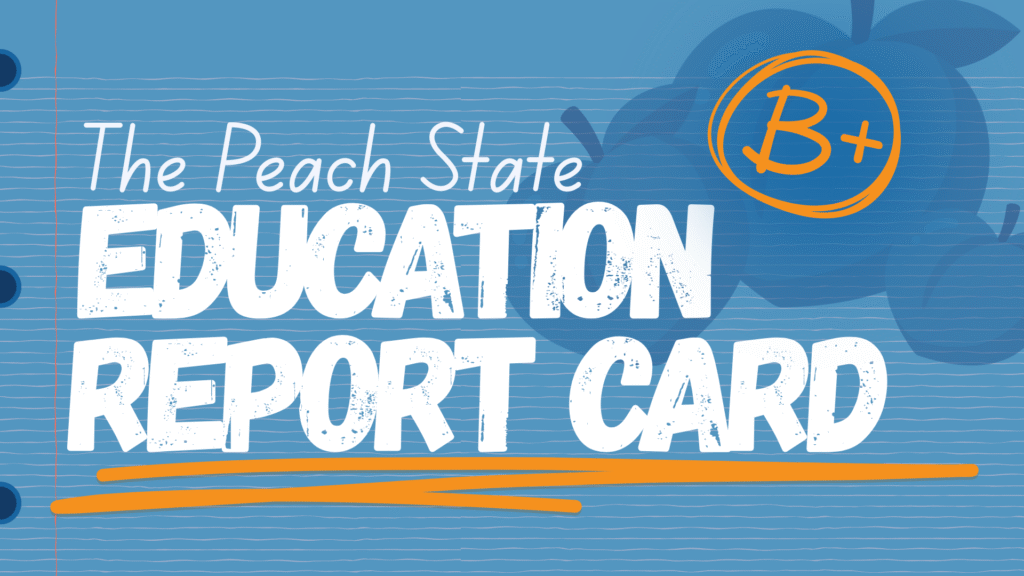
The Peach State: Overall B+
Georgia gives families wide freedom to run microschools and homeschools, backed by a first-in-the-nation law shielding them from local officials. It falls short turning that freedom into money: its Education Spending Account reaches only a narrow slice of families, and its tax-credit scholarship runs dry within days most years.
Microschools — A-
Microschools are small, independent schools that typically enroll around 15 students and run nothing like a traditional classroom. Most are started by teachers who’ve taught in both public and private schools. Georgia treats them like private schools, with almost no state involvement.
- In 2021, Georgia passed the nation’s first learning pod protection law, barring local officials from using zoning, fire, or day care to shut a learning pod down.
- In 2022, this law was challenged by Cobb County who began doing a fire-code crackdown on homeschool co-ops.
- State law does not require license, registration, or accreditation to open a microschool.
Improvements
- Georgia’s learning pod protection law helped many families during COVID. However, it has a gray area because the definition is unclear. Georgia could improve microschool regulations by extending the zoning and fire protections to small private schools, not just the learning pods.
School Choice Policy — B
School choice covers a wide range of laws, not one program: charter schools, open enrollment, and funding for private tuition or homeschooling. One newer tool is an Education Spending Account (ESA), which families can spend on tuition, curriculum, and one-off classes.
- Georgia’s ESA, the Promise Scholarship, pays up to $6,500 a year, but only to kids zoned to a bottom-25% school. It doesn’t have an income cap, but prioritizes families under 400% of the poverty line if there is a waiting list.
- A separate tax-credit scholarship gives donors a dollar-for-dollar credit for private tuition gifts, but its $150 million cap runs out within days most years.
- Georgia has lenient charter regulation similar to other charter friendly states
- Families can use any public school in their zoned district space permitting. However, trying to enroll in another district is dependent on the receiving district.
Improvements
- Require every district to accept transfers from other districts when space is available.
- Open the ESA to every family, not just those zoned to a low-rated school.
Homeschooling — B+
Homeschooling is more than a parent teaching at the kitchen table, though that’s how most families start with younger kids. Many add co-ops, online classes, or part-time enrollment later, chasing a subject a standard classroom can’t offer. Georgia asks for little paperwork in return.
- Parents need a high school diploma or GED to teach their kids
- Homeschooling requires one online notice to the state each year
- Kids test every three years after third grade, but results stay in the family’s file and never reach the state.
- Homeschoolers can play public school sports and join other activities if grades hold up and the school gets 30 days’ notice.
Improvements
- Remove the testing requirements. This is a hoop to jump through, not a necessary requirement.
- Change the homeschooling paperwork to a one time requirement rather than annual notice.
Extra Credit: Putting a Literacy Coach in Every Elementary School
Only about a third of Georgia 3rd graders were reading on grade level. Georgia backed its reading push by adding a literacy coach in every elementary school teaching kindergarten through third grade, more than 1,300 schools in all, plus a tighter rule that classrooms teach reading using curriculum based on the science of reading research.
Helpful Links for Parents
- File Your Homeschool Declaration of Intent
- Georgia Promise Scholarship Program
- Qualified Education Expense Tax Credit Information
- Find a Georgia Charter School
- Georgia Home Education Association
This is part of a series where we review and rate education access in every state in the country. Get more information here.
Author: Jon England is the Senior Education Policy Analyst at Libertas Institute. He is a fourteen-year veteran of public schools. He taught both fifth and sixth grades, receiving Weber District’s E+ Team Award. He proudly homeschools his children with his wife.
Jon received his bachelor’s degree in elementary education from the University of Utah and a master’s degree in educational leadership from Western Governors University. He spent time in the Marine Corps and separated as a sergeant in 2006.
During his time in public schools, Jon increasingly understood the importance of parental empowerment in education. This increased understanding led him to join Libertas to provide educational freedom for families. Jon enjoys spending time with his wife and five children traveling, skiing, and playing games.
Published: July, 2026