
Utah’s highest court is about to look very different, and Governor Spencer Cox gets to reshape it.
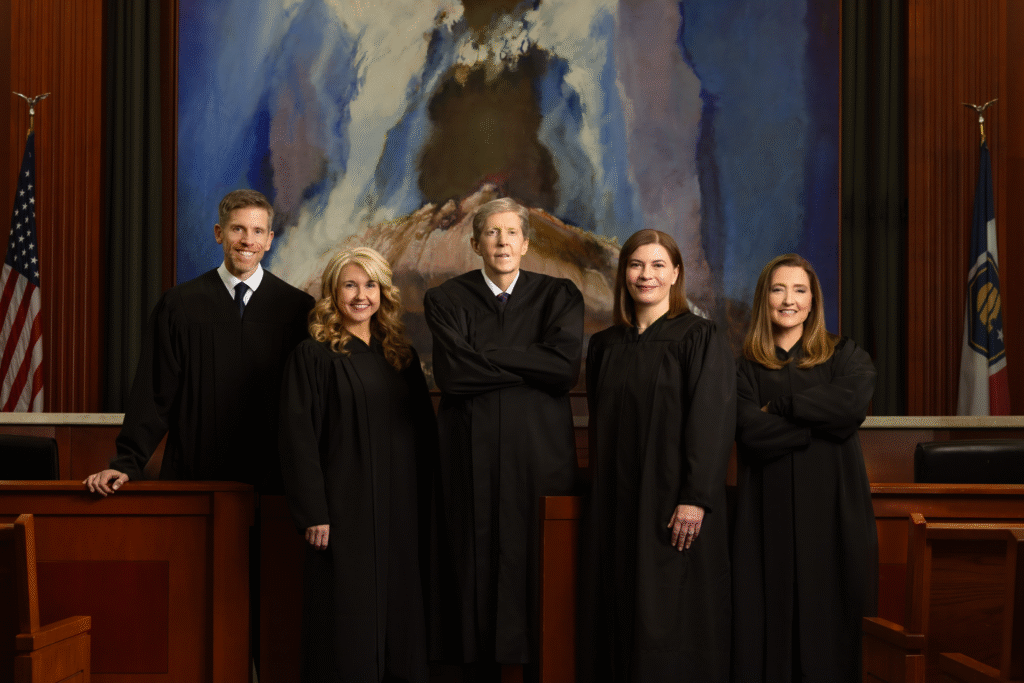
Several seats on the Utah Supreme Court are opening in a short span. In January 2026, the state Legislature passed a law expanding the court from five justices to seven, which created two brand-new seats. In May, Justice Diana Hagen resigned. And Chief Justice Matthew Durrant has announced he will retire at the end of August.
All told, the governor has four seats to fill in a matter of months. Cox also seated a new justice this past December. Once these four openings are filled, almost the entire court will be his appointees, most with less than a year on the bench.
Supporters of an expanded Supreme Court, including Governor Cox and Republican legislative leaders, said the change was necessary and a long time coming. They pointed to rising caseloads, a state population now above 3.5 million, and the fact that most states Utah’s size seat seven or more justices.
But the expansion did not pass without a fight. House Democrats and the Utah State Bar argued there was no real need, pointing to Chief Justice Durrant’s statement to lawmakers that the court had little backlog. They also objected that the bill moved swiftly through the legislative process with limited public input. Some have called it court packing, pointing to recent rulings that went against the Legislature regarding abortion and political redistricting, and worry the new seats could be used to steer the court’s direction.
Controversies aside, the open seats are being filled the same way Utah has filled them for years. Utah does not elect its Supreme Court justices the way some states do. Instead, it uses a three-step system often called merit selection.
First, a nominating commission does the initial vetting. When a seat opens, a seven-member commission appointed by the governor reviews everyone who applies, interviews the strongest candidates, and narrows the field. For an appellate seat like the Supreme Court, the commission opens a public comment period and then sends the governor a list of seven finalists.
The governor then has 30 days to make his pick from among the seven. He cannot reach outside the list. His decision is then sent to the Utah State Senate for the final say.
The Senate has 60 days to confirm or reject the governor’s pick by a majority vote. After committee questioning and additional public comment, a yes from the full Senate means the new justice is sworn in and seated on the bench. A no starts the process from the beginning.
Even though politicians do the selection and confirmation, Utah’s constitution requires these picks to turn only on a candidate’s fitness for the office, not partisan politics.
This process has been in place for years, but filling five seats within a year is not routine. For most of the last decade, the court changed slowly, about one new justice every year or two. That kind of fast, lopsided turnover is rare at any level. Even the U.S. Supreme Court’s recent run of new justices played out over five years, and no president in modern times has named a majority of that court inside a single year.
Among the states, only Arizona and Georgia have expanded their high courts in the recent past, both in 2016, and both faced the same charge of “court packing.” Utah is now a rare third modern example of expansion by statute, and arguably the most striking one, because the two new seats land on top of a resignation and a retirement, handing a single governor four appointments at once.
Once confirmed, a Utah justice serves a renewable 10-year term, with no term limit and a mandatory retirement age of 75. The choices Cox makes over the next few months will long outlast his time as governor, and Utahns will likely live with them for a generation.