Tens of millions of Americans now work for themselves rather than for an employer, and their numbers keep climbing.
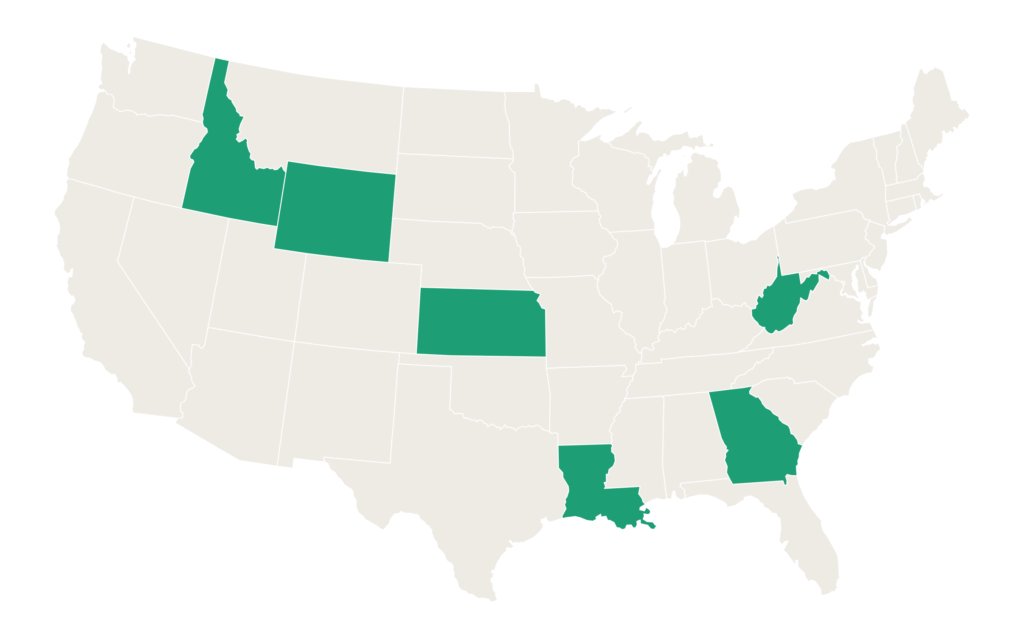
Yet the country’s benefits system was built around the traditional job, and it has largely passed them over. Six states moved to close that gap in 2026, enacting portable benefits laws in Wyoming, West Virginia, Kansas, Idaho, Georgia, and Louisiana. The idea of portable benefits is not new.
Libertas Institute was the primary architect of the original version, which Utah enacted in 2023.
States that adopted portable benefits in 2026
These laws address a problem rooted in how the country defines employment. When a business pays for a worker’s health insurance or retirement, that contribution is one of the signals courts and agencies use to decide whether the worker should be treated as an employee as opposed to an independent contractor.
For an independent contractor, that creates a bind. A company willing to contribute toward benefits risks having the independent contractor reclassified as a traditional W2 employee, which brings new tax obligations, wage rules, and liability. Faced with that risk, most companies contribute nothing. Independent contractors are left to pay for benefits on their own, and many go without, with no safety net if they get sick, lose work, or grow old without savings.
Portable benefits laws cut that knot. They establish that a voluntary contribution to a worker’s benefit account does not make the worker an employee. The account under this framework belongs to the worker, rather than the company, and follows them from one contract to the next. Contributions can fund health coverage, retirement savings, paid leave, disability protection, and emergency income, the protections a traditional job provides.
Drivers, delivery workers, freelancers, tradespeople, and sole proprietors chose independence and want to keep it. The catch has been that independent work rarely comes with a path to the security a salaried position provides. These laws open that path while leaving the flexibility intact.
Support for these laws crosses party lines, which is rare in labor policy. Most labor bills pit workers against employers, and the two parties land on opposite sides. The portable benefits model avoids that fight. It expands benefits for workers without imposing new mandates on business, which gives both parties a reason to vote yes. Louisiana’s bill passed the House unanimously, and Georgia’s cleared the Senate with bipartisan votes.
In three years, portable benefits have spread from a single Utah law to nine states. For the Americans building careers outside traditional employment, that progress reaches more of them each session.