Two families raising kids who already understand what they own
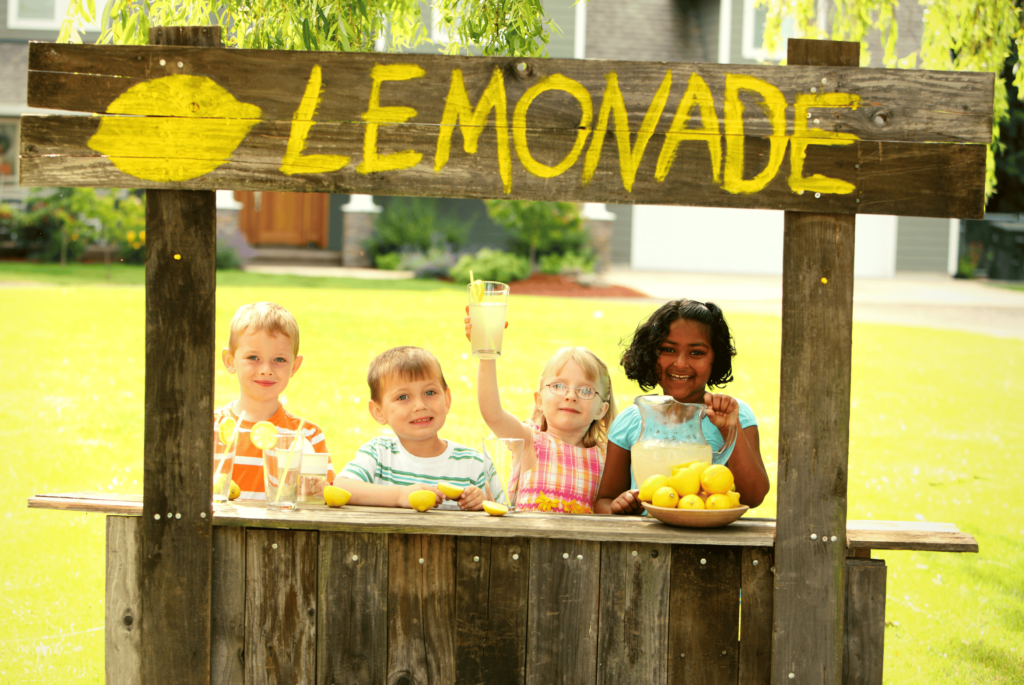
A card table at the end of a driveway. A pitcher, a stack of cups, a sign made with markers and no shortage of enthusiasm. Three kids arguing over who gets to hold the money.
It is the oldest small business in the country, and the most universal. Everybody knows what a lemonade stand is.
However, in plenty of towns it takes a permit and a fee before the first cup gets poured. A child needing government permission to sell lemonade is absurd, and it is one we have worked on at Libertas for years.
One of our emails on the subject reached Chyna the morning her three kids set up for the first time. She wrote back that day, laughing about the timing. In her state kids do not need that permission slip, and she was grateful, because after the cups and the table and the sign there was nothing left for a fee. Then she asked the question underneath it all: “Why would I have to pay for permission to sell products that I paid for with money out of my own pocket?”
Chyna is not a policy analyst. She is a mother of three young entrepreneurs with a folding table, and she got there on her own.
Kelly’s son took a different route. He learned blacksmithing and sells the metal pieces he makes under his own brand. A teenager with a forge, a product, and customers has learned things no worksheet teaches: what his work is worth, what it costs to make, what it feels like when a stranger chooses to buy it. Nobody sat him down and explained supply and demand. He met it at his own table.
There is a Tuttle Twins book where Ethan and Emily open a market for other kids to sell in, put their own money behind those small businesses, and watch what happens when somebody interferes with how the market works. Kids recognize themselves in it, because a child who has run a stand already knows most of it. She knows what her supplies cost. She knows what happens when the kid down the street drops his price. What she does not know, and should not have to learn this early, is what a permit is.
The books put the idea in front of a kid. The stand makes it real. In between is where families get stuck, because finding somewhere a seven-year-old can actually sell takes more work than it should.
That gap is what the Libertas Action Coalition works on. We look for what is already happening near you: a kids market, a fair willing to give a young vendor a table, a bill in your state worth a phone call, the groups already doing this work. And we carry stories like these across the network, because that mom with three kids and a folding table should know she is not alone.