
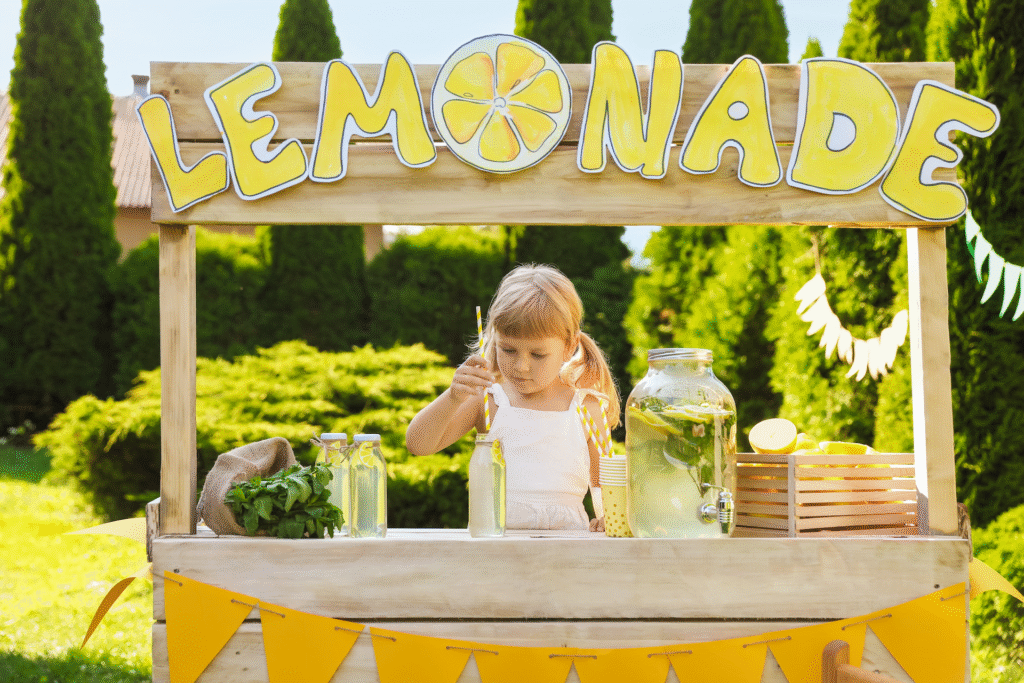
The lemonade stand has long been one of the simplest and most formative experiences of American childhood. A pitcher, a hand-lettered sign, and an afternoon of small transactions introduce a child to the satisfaction of her first real earnings.
However, in many cities across America, a folding table at the end of a driveway can trigger a vending permit, a business license, or, depending on the city, a visit from code enforcement.
In May 2018, three brothers in Denver discovered this firsthand. Ben, William, and Jonathan, ages six, four, and two, set up a stand at a park across from their house to raise money for a child in Indonesia. Their mother, Jennifer Knowles, thought the afternoon would be a lesson in entrepreneurship and charity.
The lesson turned out to be on municipal regulation. Someone complained that the stand lacked a vending permit, which would have cost $125 for a single day, more than half of what the boys raised before the police shut them down.
These stories keep recurring across the country, and they share a common root: laws written for full-time commercial operations are being applied to children selling lemonade for an afternoon.
Food safety regulations exist to protect the public from contaminated restaurants. Vending permits govern ongoing commercial use of public property. A child pouring lemonade for an afternoon falls outside both of those purposes, but most municipal codes draw no such distinction.
When a twelve-year-old sets up a stand at the end of her driveway, she is learning responsibility, math, customer service, and the dignity of earning her own money. That is exactly the kind of initiative a free society should celebrate, not penalize.
Lemonade Stand Laws address this gap precisely. They do not weaken food safety standards or permit children to open restaurants. They draw a sensible line so that when the seller is a minor, and the business is occasional, the standard permit-and-license framework does not apply.
Texas put it plainly in 2019, prohibiting any municipality from regulating “the occasional sale of lemonade or other nonalcoholic beverages from a stand on private property or in a public park by an individual younger than 18 years of age.”
Utah passed the first such law in 2017, with Libertas Institute as the lead advocate. Colorado, Missouri, Nebraska, and Texas have followed, and more than a dozen states now offer similar protections.
Across the political spectrum, encouraging young entrepreneurship is a value most Americans share.
Regulations should be calibrated to the problems they were written to solve, and a child with a pitcher and a sign is not one of those problems. Lemonade Stand Laws recognize the difference, and they protect a small but meaningful corner of American childhood.