
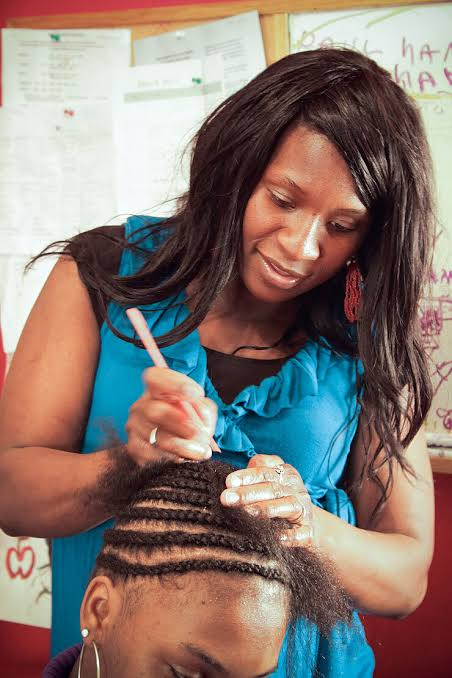
 Jestina Clayton learned to braid hair as a child in Sierra Leone. After fleeing her country’s civil war and settling near Salt Lake City, she started a small braiding business to help support her family while her husband finished school. Utah first told her she didn’t need a license. Years later, after a competitor complained, the state reversed course: now she needed a cosmetology license, meaning 2,000 hours of coursework that never once covered braiding. Rather than break the law, Jestina shut her business down.
A federal judge eventually sided with Jestina, ruling in 2012 that Utah had no rational basis for making braiders sit through training built for a different trade. Utah fixed that one problem. But her fight is a symptom of something much bigger.
Nationally, the share of jobs requiring a government license has grown from about 5% in the 1950s to roughly 22% today, according to the National Bureau of Economic Research. The number of licensed occupations has climbed right along with it, from about 30 a century ago to more than 1,100 now.
Utah lawmakers had a chance to chip away at that number this year. Senate Bill 327 would have repealed licensing for four low-risk professions: commercial interior designers, court recorders, music therapists, and polygraph examiners. (A license doesn’t make a polygraph more accurate; it just adds paperwork to a test regulators can’t vouch for.) The bill stalled. All four licenses remain on the books.
Every one of those licenses works the same way: before someone can get paid to do a job, they must first get government approval, usually through fees, coursework, and exams that have little to do with whether they can do the work well. The Journal of Labor Economics finds licensing shrinks the pool of available workers in a field by 17% to 27%. Fewer workers means less competition, and less competition means higher prices: the Institute for Justice estimates licensing costs the U.S. economy $203 billion a year, or roughly $1,600 annually per household.
Those costs land hardest on lower-income workers, career switchers, and veterans whose service-earned skills don’t come with a matching civilian certificate. That’s why Utah’s other win this session mattered: SB 90 lets veterans count military training toward a license instead of repeating it. Even so, Utah still ranks 26th nationally for its overall licensing burden, according to the Archbridge Institute — squarely average. There’s real work left to do.
That work should follow a simple standard: license jobs where doing them poorly creates a real threat of death or dismemberment, like a surgeon or an electrician. And not for a music therapist or a hair braider, where the state isn’t protecting the public so much as protecting incumbents from competition.