
In the News
Ongoing discussions about what state and local governments should do to address high home prices in Utah have recently been characterized as a “statewide zoning takeover.”

Here’s My Take
First, that’s an exaggeration.
Ideas are flying everywhere right now. Housing is an issue where you could put 50 people in a room and get 50 different recommendations.
In truth, Utah’s so-called “statewide zoning takeover” began a century ago. In 1925, the state legislature granted cities authority to adopt zoning ordinances. Since then, Utah’s housing market has been centrally planned at city hall through an ever-growing list of land-use restrictions. These rules govern everything from shed sizes to the amount of land required to build a home, and whether a homeowner can add a small cottage for a family member or maintain a farm with animals.
It’s valid for anyone to question the most excessive of these restrictions. We should keep those that prevent factories in cul-de-sacs or permanent parking headaches in neighborhoods.
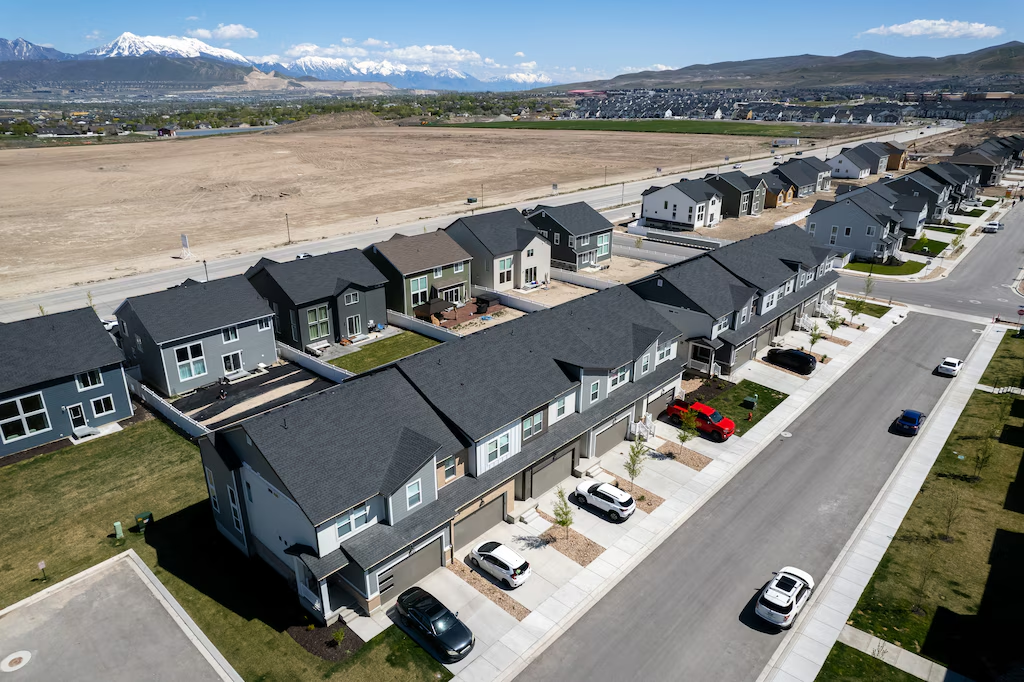
When discussions about “local control” come up, it’s worth asking: control for whom? For government, or for the homeowner? As it stands, government holds the rulebook, and too much of the debate is simply over which government entity gets to hold the pen. The deeper question is how much control individuals should have over their own property, and whether some changes could benefit current and future homeowners.
Proposals to let people choose how large their lots are for single-family homes or whether they can build backyard cottages aren’t the government taking over, it’s the government getting out of the way. That’s a change worth putting on the table.