A new Cato Institute report ranks Utah 23rd in the nation for freedom from law enforcement overreach. That earns the state a C. Several states that share Utah’s politics do better, including Montana, Missouri, North Carolina, Georgia, and Oklahoma.
Cato’s “Freedom in the 50 States” scores six areas in this category, including civil forfeiture, police accountability, and license plate readers. Most call for long conversations with law enforcement and lawmakers. Civil forfeiture is the one where Utah’s own data makes the case.
Civil forfeiture lets the government take property it says is tied to a crime, even when the owner is never convicted. The Institute for Justice, whose grades Cato uses, gives Utah’s forfeiture laws a D-.
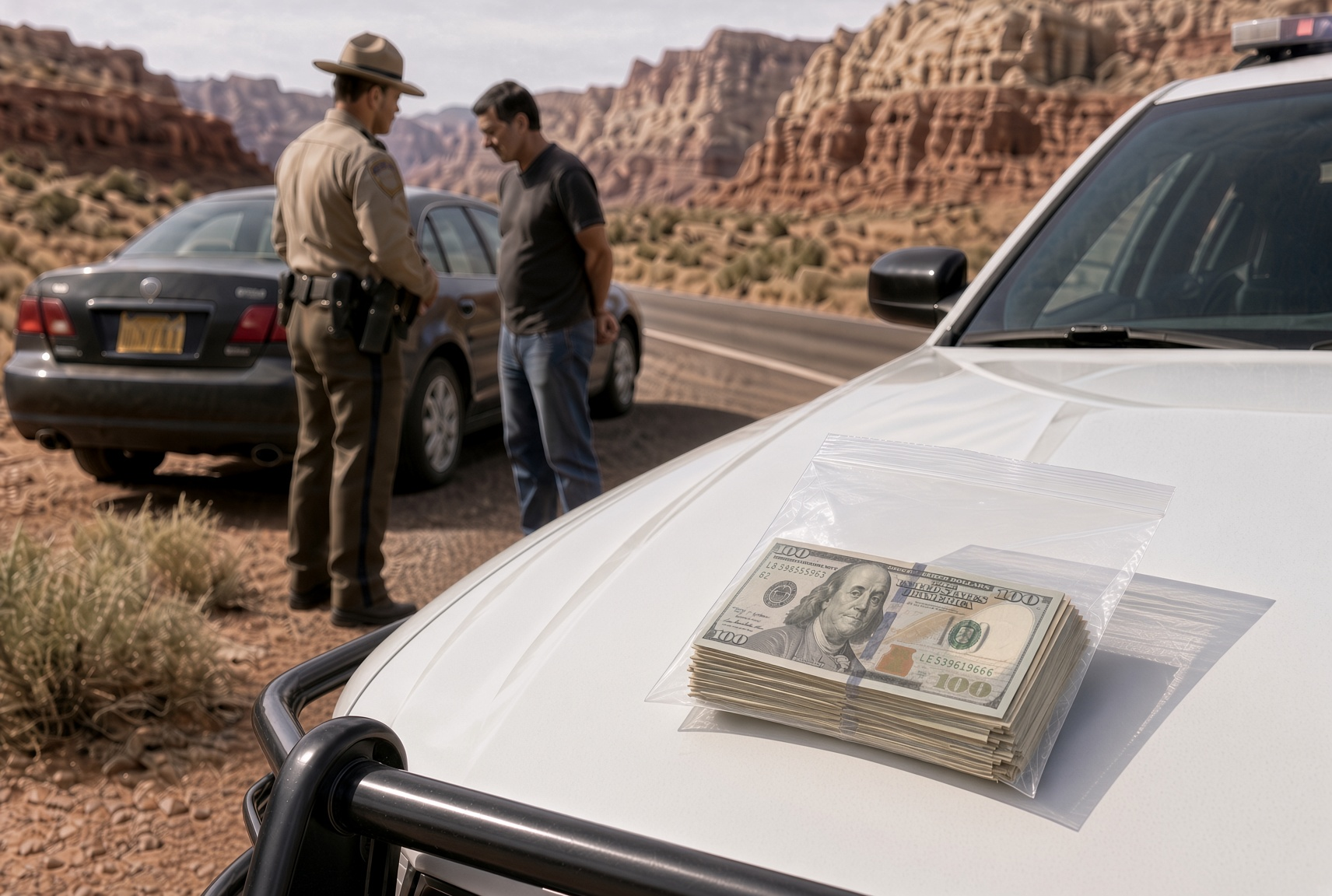
Utah’s own forfeiture reports show how it works in practice. From 2019 to 2023, a period that spans the 2021 reforms, more than 90% of Utah forfeitures were cash, and half of those were worth less than $2,020. More than half began at a traffic stop, and at least 69% went through a civil process that does not require a conviction. Forfeiture is often defended as a tool against drug trafficking organizations. Utah’s numbers describe something smaller.
Utah deserves credit for the reforms it has already made. In 2021, Libertas worked with lawmakers on SB 98, which passed unanimously. It bars forfeiture when the only offense is simple drug possession, makes agencies return property if prosecutors take no action within 75 days, and lets owners recover property during a case when holding it causes substantial hardship. Utah law also requires prosecutors to prove their case by clear and convincing evidence.
Three gaps remain. The biggest is that Utah still allows civil forfeiture, so property can be kept without a conviction. Forfeiture proceeds also go to a state grant account that law enforcement agencies draw on, which is why the Institute for Justice counts all of the money as flowing back to them. Utah voters rejected that arrangement once. In 2000, they passed Initiative B with 69% of the vote, sending forfeiture proceeds to public schools instead of law enforcement. The Legislature later sent the money back to agency grants. And while the 2021 law limited when agencies can hand seized property to federal authorities, it still lets them accept a share of federal forfeitures through the “equitable sharing” program. Utah agencies received about $1.9 million in those payments in 2022 and 2023, and nearly $24 million since 2000.
The next step is to require a criminal conviction before the state can keep someone’s property. Montana already works this way. Under Montana law, the government can pursue only criminal forfeiture, and property can be forfeited only if the defendant is convicted. Utah should also stop agencies from accepting federal equitable sharing payments and send forfeiture proceeds to a fund that law enforcement does not control.
A conviction requirement does not take a tool away from police when they catch a criminal. Criminal forfeiture still lets the state take the proceeds of a crime after a conviction. It only asks the government to prove the crime before it keeps the property.
The Institute for Justice found that since 2020, only one state, Maine, has dramatically improved its forfeiture laws. Utah has led on forfeiture before, through voters in 2000 and lawmakers in 2021. It can lead again by closing these gaps. Once a crime is proven, taking the property used to commit it or gained from it can be a proper use of police power. But law enforcement’s first duty is to protect the rights of the people it serves, including their rights to life, liberty, and property. Forfeiture should serve that duty, not compete with it.