This op-ed was originally published in City Weekly on February 28, 2024.
Utah’s public schools receive and spend over $11,000 per student. That is $3,000 more than the Utah Fits All Scholarship.
There is a lot of attention paid to the weighted pupil unit (WPU) which is $4,280, confusing many in the public, like this author. It makes $11,000 seem inflated. But the WPU is only one of 75 line items that the state uses to fund public education.
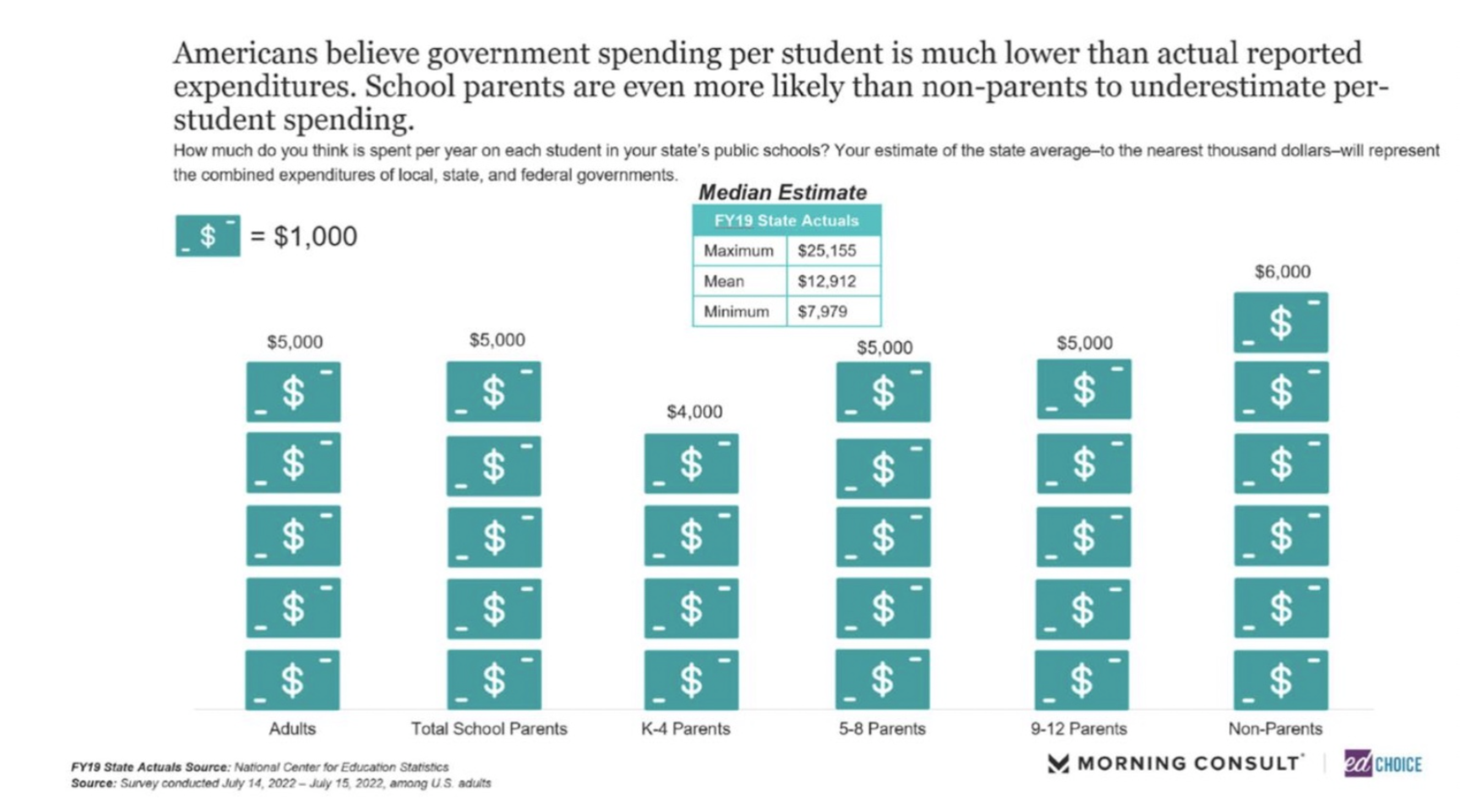
But Utah isn’t the only state to have their public education funding misunderstood. You can look at this poll from EdChoice to learn more.
The other line items in the state budget include money for buildings, technology, the arts, class size reduction, teacher salary supplements, and many other items.
And that isn’t even all of the funding that public schools receive per student. Local districts can create a variety of property taxes, implement school fees, issue bonds, and receive donations or fund raise for special projects (would anyone like to buy a candy bar?)
But wait, there’s more! The federal government also provides funding for things like special education, school lunch, and other programs.
So, when people say that the Utah Fits All is over funded compared to public schools, you can help them understand the true public school funding.
To further decode Utah’s education budget puzzle, click here.