Utah, along with much of the West, is once again in a drought. With the dry year come the familiar conversations about farms, growth, and green lawns. But join one of those conversations, or just try to get the facts, and you quickly hit an obstacle.
Water district employees, farmers, industry, and residents each understand their own piece of the system, which leaves plenty of room for misconceptions. Here are a few of the most common, and some ways freedom and free markets can help.
Are Farmers to Blame?
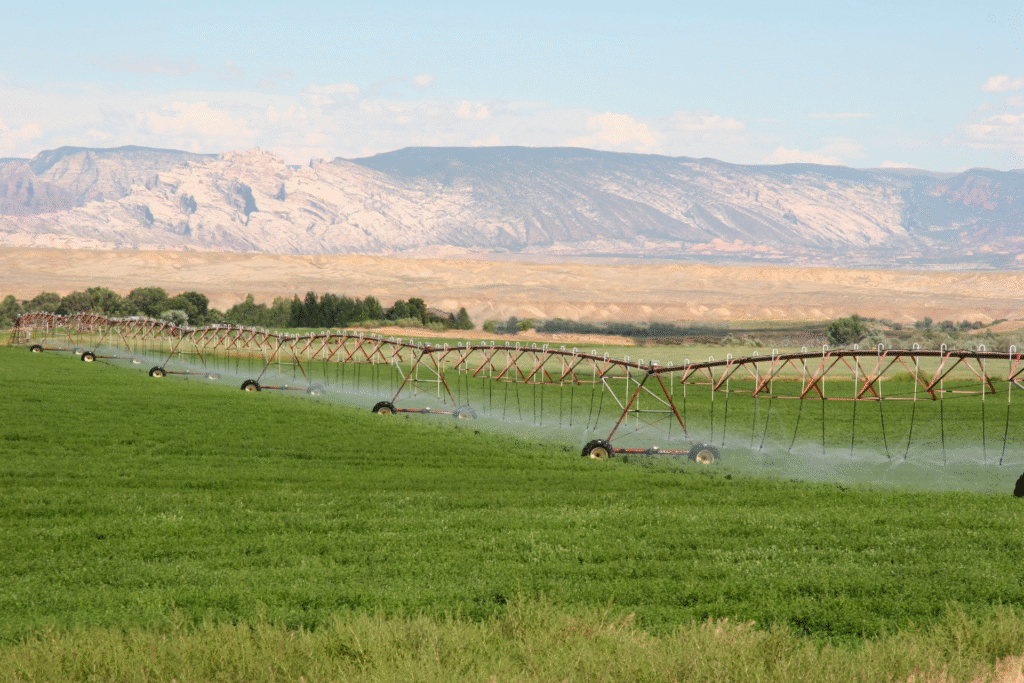
In Utah, farming uses approximately 75% of diverted water and alfalfa is the usual boogeyman. Yes, it’s a water-intensive crop, and no, humans don’t eat hay. But the animals we do eat certainly consume it. Cows eat it for example, and cows don’t just become beef, they are necessary for milk and dairy production.
More importantly, irrigation water for farms isn’t ejected into outer space. Some enters the crop, some soaks into the ground and recharges the water table, and some evaporates. Evaporation forms clouds, falls as mountain snow, and melts back down to fill our reservoirs and rivers. If this sounds like the water cycle you learned in grade school, that’s because it is. It’s not just farmer propaganda.
So let’s give the people who feed us a break. And let’s certainly not go down the path of banning certain crops or animals.
Is Residential Water Use to Blame?
When someone turns on the tap to wash their hands or rinse the dinner plates, where does that water go? A little evaporates, but most goes down the drain, into the sewer, to a treatment plant, and back into the water system. Indoor home use is almost a closed loop.
It’s also small. Indoor residential use is only a few percent of all the water Utah diverts in a year. One modest field can use as much water as a whole neighborhood uses.
So we aren’t going to solve a drought with shorter showers, weaker toilets, or stopping new homes from being built. Indoor use is truly a rounding error, and current and future homeowners don’t deserve the blame.
What About Lawns?
Outdoor watering is where residential use can add up. Even so, the gains are only at the margins as all residential use, indoor and outdoor combined is under 20 percent of the water Utah diverts, and outdoor landscape watering is only about 10 percent.
Suppose we could halve this number. Wouldn’t that be worth doing, if it left more water for farms and our lakes and reservoirs? The good news is we can, using a little freedom and a few free-market principles.
Fix the Zoning and the Pricing
Reducing outdoor water use doesn’t mean abandoning yards. In fact, two fixes would do most of the work.
Fix the zoning. Many jurisdictions still effectively require thirsty lawns through various regulations within landscaping ordinances. Ease up, and legalize people finding their own solutions.
- Let people pull the Kentucky bluegrass and put in a front-yard garden or drip-irrigated plants. Remove permits and questioning whether a raised bed counts as an accessory structure.
Let Saving Water Save Money. This is a big one. Find the “base fee” on your water bill and look at your property taxes. You’ll find that much of what you pay isn’t based on how much water you use. When a thousand gallons costs a few dollars, there’s no reason to consider landscaping changes. Tie more of the bill to actual use, and people have a reason to cut back on their own, watering a little less and fixing the broken sprinkler sooner, because now it’s their money running down the gutter.