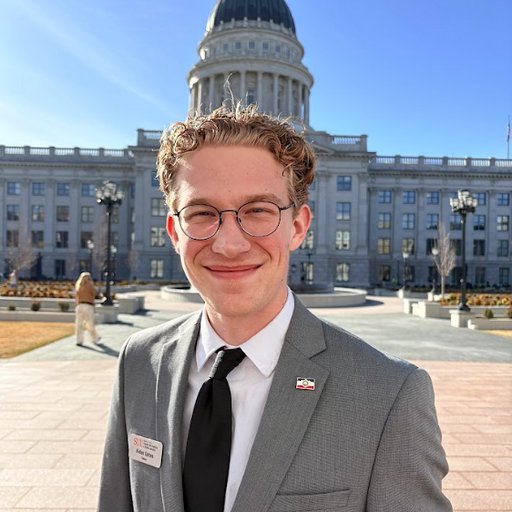
As someone who grew up in southwestern Utah and worked my way through the Zion National Park tourism industry, I have heard more than my fair share of comments about short-term vacation rentals, such as those on online platforms like Airbnb and Vrbo. Short-term rentals are, however, a point of conversation and concern across the state, beyond just the landmark destinations that Utah has to offer.
There are a number of reasons that might explain why Utahns are so opinionated about short-term rentals. For one, Utah is ranked 15th of all U.S. states for tourism while being ranked 30th in population. Some also believe that these rentals may negatively impact an already stressed housing market (although this has been shown to be largely untrue, especially outside resort areas). And, perhaps most importantly, the Utah State Legislature has left short-term rental regulation in the purview of city governments.
Using powers delegated by the state, cities have passed ordinances that regulate short-term rentals in very different ways. Most cities follow a similar pattern of short-term rental regulation by:
- Allowing short-term rentals in most zoning districts;
- Requiring operators to obtain a business license; and
- Creating a specific set of regulations regarding noise, parking, and nuisance.

Salt Lake City’s New Short-Term Rental Ordinance
However, this model is not always followed. For example, Salt Lake City updated its short-term rental ordinance in June of this year. A key part of this ordinance is a reinforcement of the city’s ban on short-term rentals in residential areas. While short-term rentals were previously prohibited in residential zones, they are now expressly permitted in only a few districts, including the city’s Mixed-Use, Downtown, Airport, and Manufacturing districts. These districts include only 25% of the city’s housing units. Thus, by not allowing rentals in residential areas, renters are limited to a quarter of the options in areas that are potentially less than ideal for visiting the capital city.
Beyond just zoning restrictions, Salt Lake City also added many new provisions to its regulatory framework for short-term rentals. Operators of short-term rentals must pay $500 in annual licensing fees and per-unit fees for a business license. Single-night stays are prohibited, and properties may only be rented for 200 nights per calendar year. A local point of contact must be available 24 hours per day. There is now a three-strikes policy for nuisance violations, such as parking and noise complaints.
Some of these regulations, like the three-strike rule and the availability of a point of contact, make sense and improve the communities in which individuals operate short-term rentals. The requirements for a minimum of 2 nights per stay and a maximum of 200 nights per year are much stricter to prevent a small number of overnight stays that disturb communities.
All in all, Salt Lake City’s insistence on its ban on residential zones along with its new approach to regulating short-term rentals makes it one of the most restrictive in the state.
On one hand, noise and parking enforcement, licensing, and a local point of contact are all the tools that a city should be using to ensure that the operators who are negligent of their communities are taken care of. On the other hand, effective bans based on zoning and minimums on rental durations go beyond reasonable tools and begin to limit the property rights of all short-term rental operators without cause in an attempt to curb the few who are careless at the expense of the honest and attentive.
The Solution
These regulations leave operators and renters with an unnecessarily narrow set of choices. They also cut off a large segment of the clientele these short-term rentals are designed to accommodate: company retreats, families who need multiple rooms, or those who simply prefer the experience of having their own space to staying in a hotel.
Municipalities interested in balancing property rights and neighborhood concerns should consider taking an approach similar to Salt Lake City’s regulation of accessory dwelling units: broad approval, with meaningful penalties for recurring nuisance violations.
If property owners can operate short-term rentals peacefully, safely, and with respect for their community, there should be limited government interference. If they cannot, the city can enforce its noise, parking, and nuisance regulations. This would ensure an approach that addresses legitimate community concerns without preemptively treating property owners as irresponsible or problematic.