
Carter’s Case Shows the Cost and Risk of Utah’s Death Penalty

In the News

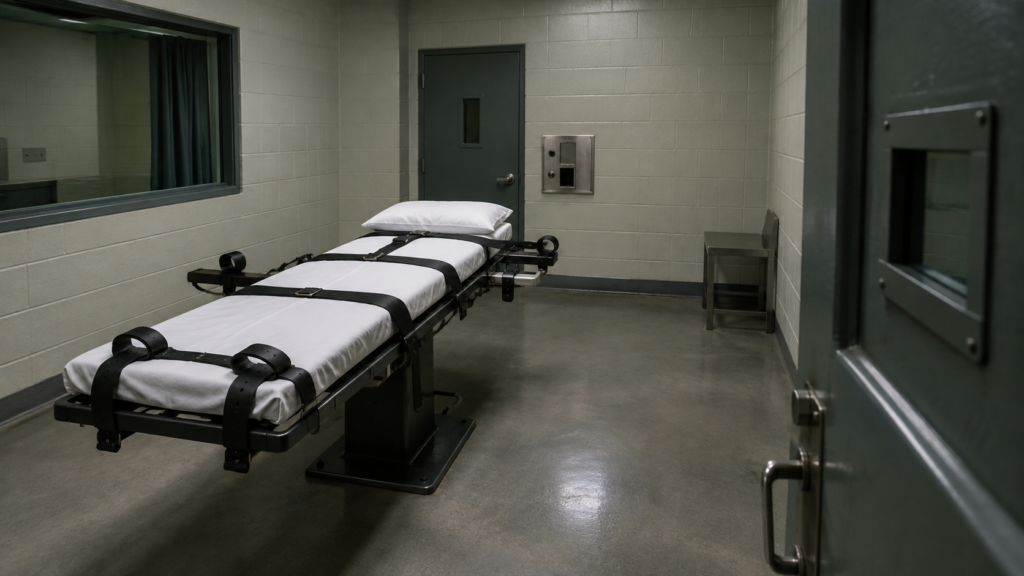
KUTV 2News reported Monday that a judge ordered Douglas Carter released on bail after more than 40 years on Utah’s death row. Utah County prosecutors dropped the death penalty last week after new DNA testing found Carter’s profile does not match blood from the crime scene.
Here’s My Take

Carter was sentenced to death twice, in 1985 and 1992. In 2025, the Utah Supreme Court upheld findings that police paid two witnesses about $4,000 and coached them to lie about it, and that the prosecutor withheld the payments and knowingly let false testimony stand. The court held those violations prejudiced his trial and resentencing. They came to light only after his lawyers located the witnesses in Mexico in 2011, 26 years after his original trial.

A living prisoner can benefit from that slow correction, and an executed one cannot. A 2014 study in the Proceedings of the National Academy of Sciences estimated that at least 1 in 25 people sentenced to death is innocent. Utah’s Legislative Fiscal Analyst estimated in 2012 that a death penalty case costs taxpayers about $1.66 million more than life without parole. Our policy brief, The High Price of Retribution, laid out both problems, and Libertas supported repeal bills in 2016, 2018, and 2022.  

In Conclusion

Whatever a retrial decides, Carter’s case shows how long it can take for the truth about a conviction to come out. Libertas continues to support repealing the death penalty and relying on life without parole and other long sentences, which protect the public, cost less, and leave room to correct a mistake.


Author Profile Image
About the author

Josh Nemeth

Josh Nemeth is the Criminal Justice Policy Analyst at Libertas Institute. Before joining Libertas, he spent a decade in criminal prosecution between Utah and Montana, most recently as a Special Victims Unit prosecutor for Cache County. He also works as a criminal defense attorney, giving him experience on both sides of Utah’s criminal justice system. That background informs his commitment to criminal justice reform grounded in limited government and individual liberty, with practical solutions that protect public safety. Josh holds a J.D. from BYU’s J. Reuben Clark Law School and degrees in business. A father of four, he lives in rural Cache County with his wife and children.

Share Post:

Fighting for a Future Where Individuals Are Fully Liberated to Pursue Their Dreams, Free from Coercion and Control.

You Might Also Like

Lower mortgage rates would unquestionably give buyers some relief. But relying on a return to historically unusual 3–4% mortgages is not much of a strategy for young families today.
We allow people to eat sugary foods despite the adverse health effects. The same respect for individual choice should extend to other risky behaviors.
A family pulled their daughter from a school that shut them out. When an Arkansas amendment threatened that choice, parents kept it off the ballot.

Help us Nail and Scale Policies to Reduce Government Control

Your tax-deductible contributions to Libertas Institute increase freedom across the country.