Consider the following image taken in 1954 in Detroit.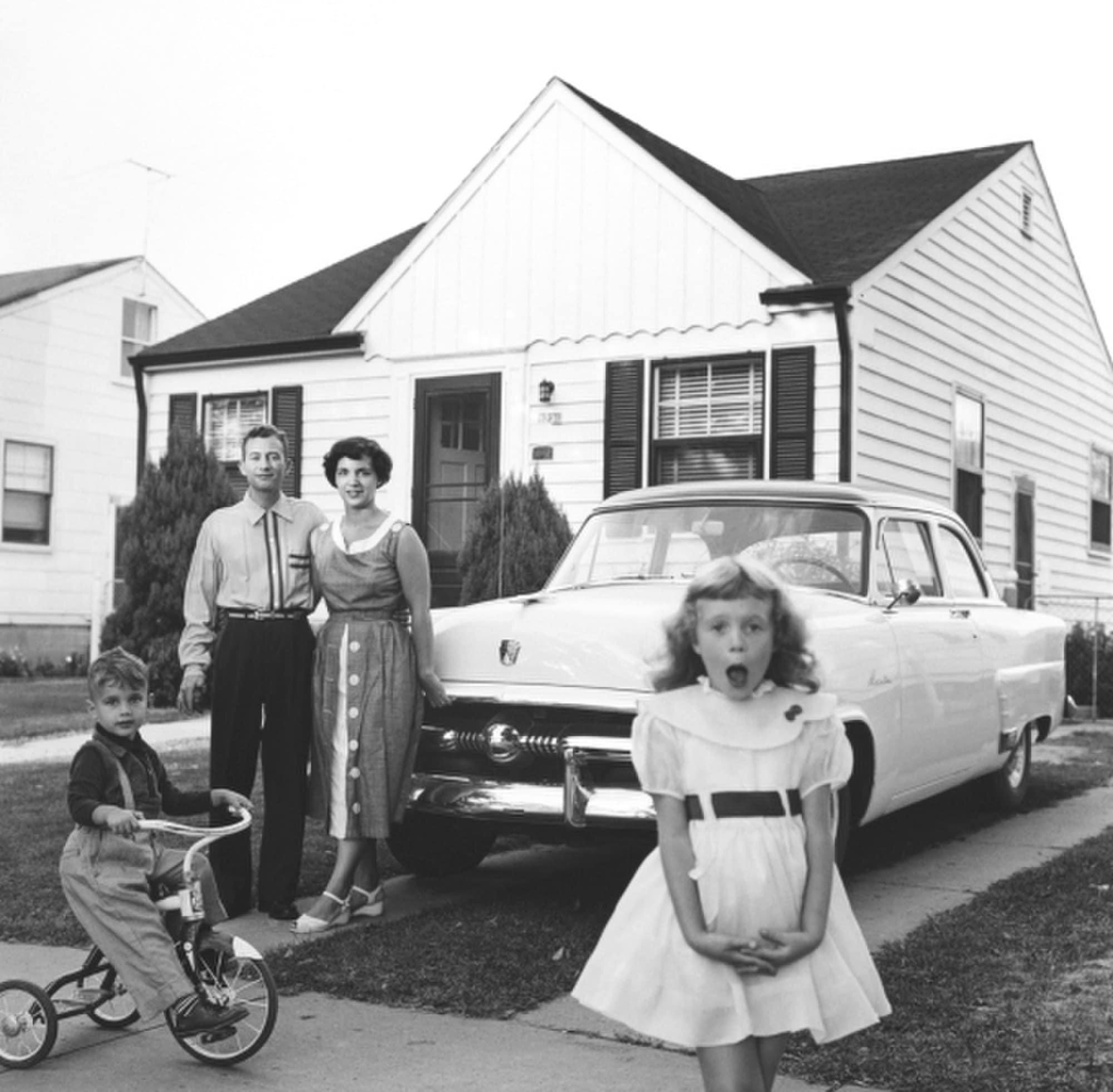
Out front stands the Smith family: two parents, two children, a car, and the modest detached home of an ordinary Ford factory worker.
The photograph was taken by Japanese photographer Jun Miki on his first visit to America. It was part of a photo essay that chronicled the prosperity of America, and showed what an average factory worker could afford.
There was a formula behind that starter home, and recreating it today means removing a series of government barriers.
Anatomy of a Starter Home
So what was the formula that made it possible to build so many lower-cost homes that young families could afford?
Modest Sized House
House size gets much of the attention when people picture a starter home, but being 900 square feet with two bedrooms was not essential to the formula. Many were expanded, and later starter homes were often built with three bedrooms and two bathrooms from the start. What mattered was keeping the house modest enough that buyers were not paying for more home than they needed.
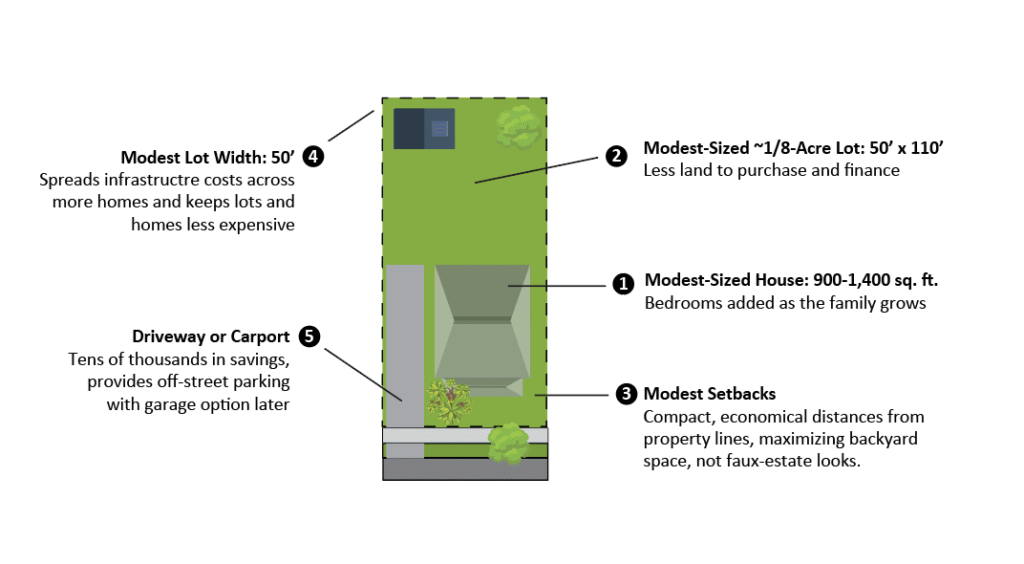
A Modest ~1/8 acre lot.
A modest house is not much of a starter home if it has to sit on an expensive piece of land. Many postwar starter homes used lots of roughly 5,000 to 6,000 square feet, about one-eighth of an acre. In high-cost land markets like Utah, that part of the formula matters more today than it ever has.
Modest Setbacks
Starter homes weren’t trying to imitate luxury. They weren’t pushed back far from the street to create the appearance of an estate. A modest front yard left more of the lot for a private backyard, with enough room to throw a football, put up a playset, add a shed, or expand the house later. They also recognized that privacy could be created with fencing and trees rather than simply putting more space between homes. Having homes sit a little closer together than some might prefer was an important tradeoff that helped make the economics work.
Modest Lot Widths
A 50-foot-wide lot is not especially narrow, but going any wider really undermines the starter-home formula. Many zoning codes today prohibit lots that narrow, instead requiring something closer to 65 feet.
That extra 15 feet means 30 percent more frontage for every home and fewer homes that can be built on the same tract of land. The cost of the land, roads, sidewalks, water lines, sewer lines, and other infrastructure is then spread across fewer homes. Each finished lot becomes more expensive, pushing builders toward larger, higher-priced houses that can justify the added cost.
Multiply that across an entire subdivision, and a seemingly small change in lot width does more than increase infrastructure costs. It changes what kind of home makes financial sense to build.
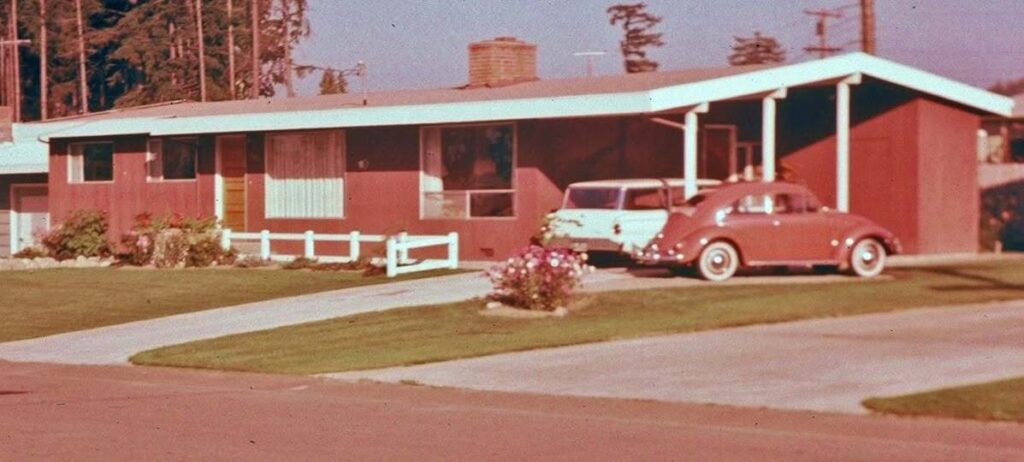 Carports and Parking Pads
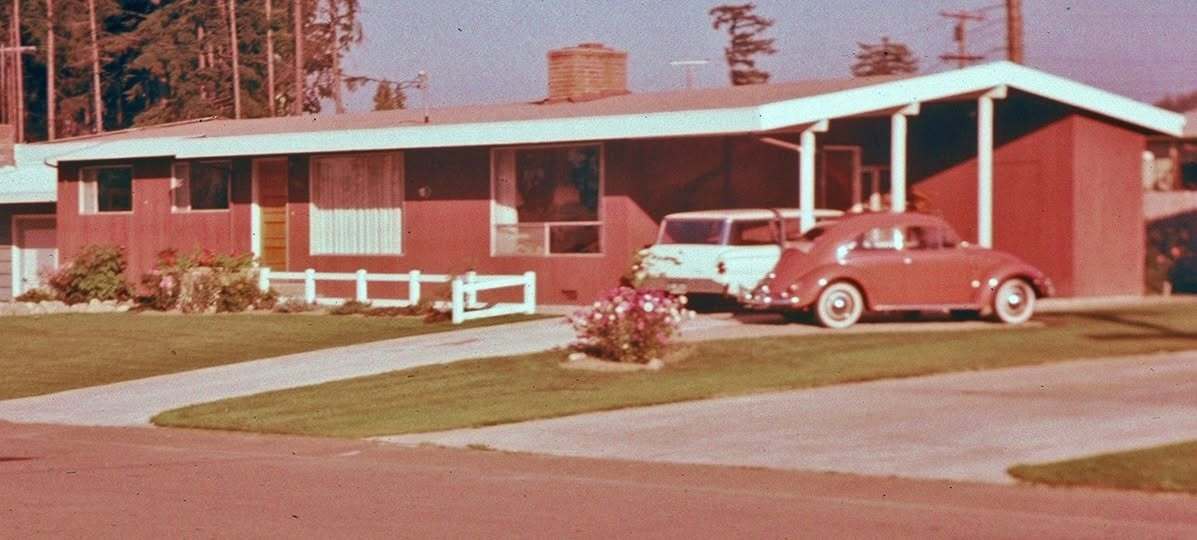
Starter homes from the 1950s through the 1990s often featured carports or simple parking pads, not just attached garages. Today, however, many zoning codes do not count those options toward parking requirements and instead require enclosed garages. Garages add tens of thousands of dollars in construction costs, consume valuable lot space, and push builders toward higher-priced homes.
Basic Infrastructure, Not a Mandated Amenity Package
Starter homes did not come with expensive clubhouses, pools, landscaped common areas, or other HOA-maintained amenities rolled into the price. Today, cities often require these features through planned-development ordinances, rezoning approvals, or development agreements. For many families, affordability itself, along with avoiding an HOA, is the most important amenity of all.
How to Get Started Again
Texas offers a useful model for how to get starter homes back. In many parts of the state, communities never enacted many of the regulations we just toured. And cities such as Austin and Houston have rolled some of them back. By preserving and restoring the regulatory conditions that make starter homes possible, Texas has shown that rapid economic growth does not have to mean every fixer-upper costs $500,000.
In short, the modest starter home needs regulatory relief. Someone may be able to seek a special approval, but starter homes will not come back if every small project requires a fight. Communities need to make a few key adjustments and make these homes normal and easy to build.
The good news is that, for most local governments, the necessary adjustments are relatively minor. Reduce minimum lot sizes, lot widths, and setbacks. Let carports and parking pads count. Most importantly, give a property owner proposing a starter home a clear path to a quick yes. With a few changes, local governments can make starter homes a normal thing to build again, benefiting today’s young families and the generations that follow.