
Two hundred and fifty years ago, American colonists went to war over an idea: a person’s home is their castle. No government can walk through your front door without justification.
British soldiers used “general writs of assistance,” open-ended search warrants with no named individual, no stated reason for a search, no expiration date, and authorization to seize anything and everything. The Founding Fathers found the concept wholly incompatible with a free society where all people have inalienable rights.
The Fourth Amendment is the Founding Fathers’ answer to British writs of assistance. The Fourth Amendment reads:
“The right of the people to be secure in their persons, houses, papers, and effects, against unreasonable searches and seizures, shall not be violated, and no Warrants shall issue, but upon probable cause, supported by Oath or affirmation, and particularly describing the place to be searched, and the persons or things to be seized.”
The Supreme Court, lawyers, and judges in lower courts have bickered and argued over the meaning of each of these words ever since.
But why should a normal person care about a 200+-year-old sentence?
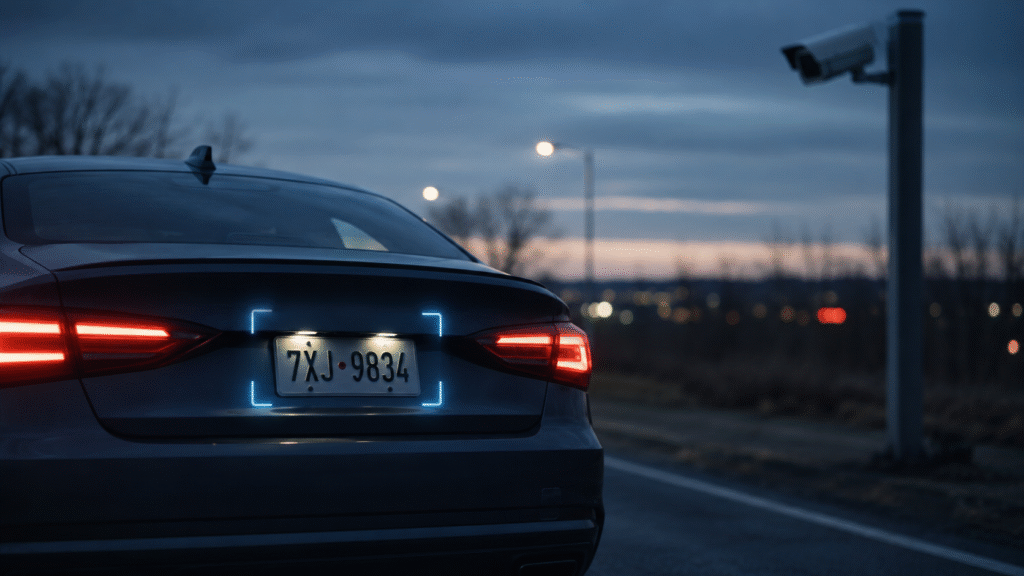
Because the government is still trying to write blank checks. They just look different in the digital era.
Instead of a redcoat with a writ, it is a Flock camera that photographs your license plate every time you drive past it and stores your location history indefinitely. Instead of soldiers rifling through your desk, it is a federal agency purchasing your data from a broker who collected it from an app on your phone. Instead of a general warrant, it is a “geofence” warrant that demands the location data of every person who happened to be near a particular street corner at a particular time, innocent or not.
Governments have always wanted to know where you go, who you talk to, and what you think. The Fourth Amendment exists because the Founders understood human nature and decided it needed a structural check
For 235 years, that check held reasonably well. If the government wanted to search your home, it had to convince a judge. If it wanted to read your mail, it had to seize it. The friction was built into the system.
Digital surveillance removed that friction without asking permission. Today the government knows more about your life from your phone than any colonial soldier could have learned by living in your spare bedroom for a month. Courts allowed this because the data was technically “collected by a third party,” where you gave away any expectation of privacy.
The Supreme Court has spent the last decade catching up to that reality, but it’s not finished.
In Utah, approximately 30 cities and counties have contracted with Flock to photograph and log every vehicle that passes a fixed camera. The data is retained and shared with federal agencies. It has been used by law enforcement officers to track former romantic partners. No legislature voted to initially authorize state and nationwide camera surveillance. No residents were polled. Cameras went up, contracts were signed, and your data started flowing.
250 years later, the question is the same: who gets to decide when the government has justification to search your life? The answer then and now is still the right one: a judge. Not a vendor or algorithm or police department. A judge, with probable cause, describing specifically what they are looking for and where they expect to find it.
That is not a radical idea but rather a founding idea. It is worth defending at 250 the same way it was worth fighting for at the beginning.