Utah’s Legislature spent considerable time this session debating how to improve education across the state. Conversations ranged from technology and artificial intelligence to culture issues, teacher evaluations, and higher education reforms. Lawmakers also revisited several school choice policies and considered changes that could affect emerging education models like microschools.
Several proposals moved the state in a positive direction by reducing barriers, expanding flexibility, or improving market signals within education systems. In other cases, potentially harmful changes were proposed but ultimately improved through the legislative process. The following policies were among the most significant education-related issues Libertas Institute tracked this session.

✅ Education Choice Policies
SB 54 from Sen. Fillmore and Rep. Walter modified the Carson Smith Scholarship to align several administrative rules with the Utah Fits All Scholarship program. The changes were largely technical but were designed to make the program easier for families to use and to bring more consistency across Utah’s education choice programs.
HB 467 from Rep. Pierucci and Sen. Cullimore initially proposed significant changes to the definition of a private school for the purposes of scholarship eligibility. The original bill would have required in-person instruction, limited scholarship funds to tuition payments, and required schools to be accredited in order to qualify. After concerns were raised, substitute language removed the changes to the private school definition and eliminated the accreditation requirement.
Our Take:
The Carson Smith Scholarship adjustments were modest but helpful for families navigating Utah’s growing education choice ecosystem. Alignment between programs reduces confusion and improves accessibility.
We were particularly concerned about the early language in HB 467. Requiring in-person instruction and accreditation would have unintentionally excluded many innovative learning models, including microschools and hybrid schools. These kinds of restrictions often benefit established institutions while limiting new educational approaches. The substitute version addressed these concerns, and we appreciate the sponsors’ willingness to work through the issue.
✅ Microschool Deregulation
HB 126 from Rep. Defay and Sen. Fillmore addressed zoning and property conversion issues related to microschools. Early language in the bill would have prohibited school founders from purchasing a home and converting it into a microschool. While the intent was to address neighborhood concerns in specific circumstances, the language could have prevented many viable properties from being used, including large residential lots or rural properties.
Through the legislative process, the bill was revised to clarify that cities may set reasonable ordinances regarding lot size, road access, and similar factors. The final version also explicitly allows founders to convert existing structures into microschools so long as they comply with building codes and local ordinances.
Our Take:
Clarifying that cities can set appropriate local ordinances did not change existing law, but it helped resolve confusion that could have created unnecessary delays for new school startups.
More importantly, replacing the prohibition on home conversions with language allowing the conversion of existing structures represents a significant win for education freedom. Facility access is one of the largest barriers for microschool founders. Opening more properties for potential school locations reduces startup costs and allows more entrepreneurs to create new learning opportunities for families.
✅ Higher Education Disruption
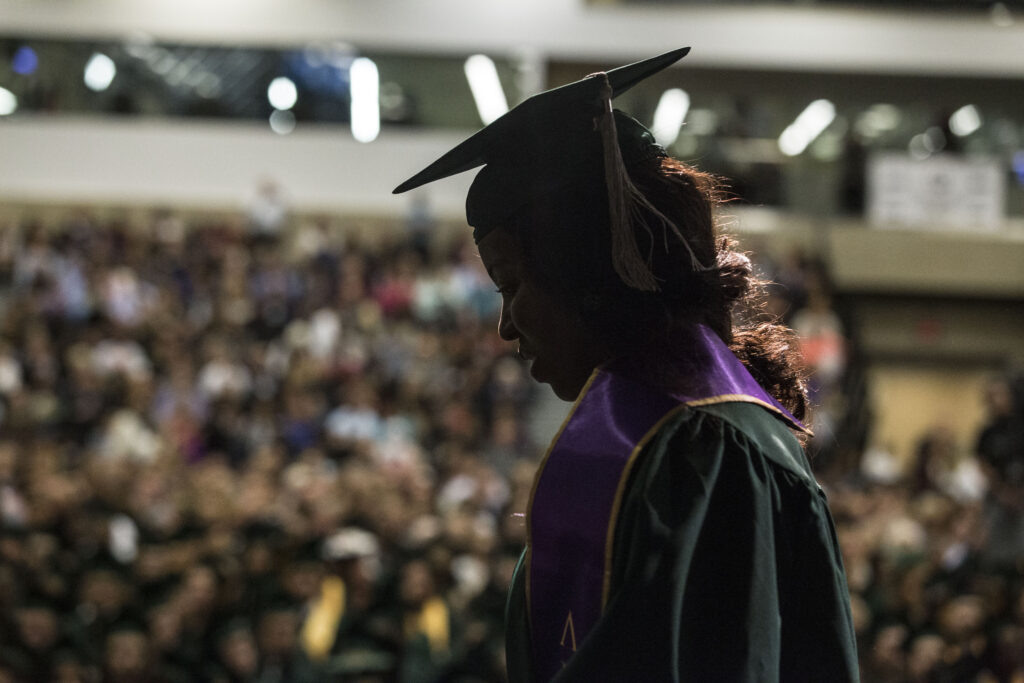
HB 353 from Rep. Wilcox and Sen. McKell improves the process for transferring college credits between institutions. The bill requires the Utah System of Higher Education to accept credits from outside institutions more readily, allowing students to apply those credits toward graduation requirements.
SB 216 from Sen. Milner and Rep. Karen Peterson modifies the funding formula for Utah’s colleges and universities. The bill removes legacy funding structures and places greater emphasis on enrollment levels when allocating institutional funding.
Our Take:
Making it easier to transfer credits gives students more flexibility and can significantly reduce the cost of earning a degree. Students will be better able to take advantage of lower-cost options such as community colleges or online programs without risking the loss of credits.
Shifting funding toward enrollment also introduces modest market pressure within the higher education system. Institutions that attract students will receive resources, while those that do not must adapt. These reforms are modest, but they represent a meaningful step toward a more affordable system.
❌ Occupational Licensure Reform
SB 327 from Sen. Johnson proposed eliminating occupational licenses for several professions, including court reporters, deception detection specialists, music therapists, and commercial interior designers. The bill sought to remove regulatory requirements in fields where licensure provides little evidence of improving public safety or consumer outcomes.
The bill ultimately failed to advance, largely due to its late introduction during the legislative session.
Our Take:
Reforming occupational licensure remains a priority for Libertas Institute. Excessive licensing requirements can limit employment opportunities, raise costs for consumers, and create barriers to entry for skilled professionals.
Licensure should be reserved for occupations where mistakes can cause serious harm or loss of life. In many other fields, market reputation, employer standards, and consumer choice provide more effective accountability than government licensing. We hope to see this conversation continue in future legislative sessions.
🟡 AI in Education
Several bills addressing artificial intelligence were introduced this year, with two directly affecting education. HB 273 from Rep. Defay and Sen. Wilson placed strict limits on the use of AI for direct instruction in schools. SB 322 from Sen. Johnson and Rep. Wilcox established an AI sandbox allowing public schools to experiment with AI technologies under a controlled framework.
Both bills reflect the growing recognition that artificial intelligence will play a significant role in the future of education.
Our Take:
Libertas Institute generally does not take positions on how public schools structure instruction. However, we are concerned with policies that restrict innovation.
Artificial intelligence has the potential to dramatically improve education by personalizing learning, accelerating academic progress, and freeing educators to focus on mentorship and real-world skill development. Policies that allow experimentation and responsible testing are far more likely to produce positive outcomes than those that attempt to restrict emerging technologies before their potential is fully understood.
Looking Forward: Expanding Opportunity in Utah Education
Education policy is often framed as a battle over systems, but the real question is whether families and students have the freedom to pursue better options. This legislative session both encouraged progress and left important reminders of how easily innovation can be constrained. Policies that expand educational choice, reduce unnecessary barriers, and introduce healthy competition help create an environment where new ideas can flourish and families can find solutions that work for their children.
Utah has increasingly positioned itself as a state willing to experiment with new approaches to education. Continued progress will depend on policymakers remaining open to innovation while resisting the urge to impose rules that unintentionally lock in the status quo. When barriers are removed and families are empowered to choose, entrepreneurs, educators, and communities will continue building the diverse learning options that Utah students deserve.