
California lawmakers are pushing a one-time 5% tax on residents worth over $1 billion to plug a massive budget deficit.
On the surface this seems like a narrowly tailored policy that only affects the ultra-wealthy, satisfying a popular “eat the rich” mindset. However, while some justify targeting billionaires for their wealth, the basic economics of this harsh tax are structurally guaranteed to backfire.
Ultimately, piling this mandate on top of an already burdensome tax code will only accelerate the state’s ongoing exodus of business and capital, providing a clear case study on the unintended consequences of punitive tax policy.
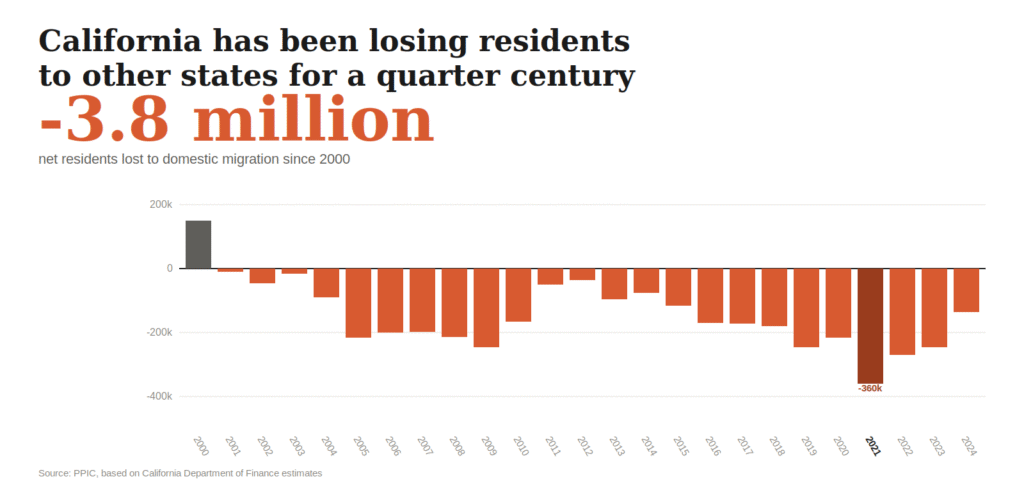
The principal flaw in California’s plan is a fundamental misunderstanding of capital mobility. Billionaires are highly mobile individuals, and they will not simply sit around while the government aggressively targets their money.
In fact, six billionaires fled California before the January 2026 residency deadline, removing an estimated $26.7 billion—over a quarter of the projected new tax base—from the state’s taxable wealth. A recent study by the nonpartisan California Legislative Analyst’s Office confirmed this predictable capital flight, warning that this ongoing exodus will cost the state hundreds of millions of dollars in income tax revenue annually.
An equally alarming element is how the bill alters taxation itself by targeting unrealized gains based on ‘presumed fair market value.’ Government bureaucrats will arbitrarily estimate what privately held companies are worth, forcing founders to pay a 5% penalty without selling a single share.
Company shares aren’t sitting in a secret bank account; that capital is actively funding business operations. Taxing unrealized gains would create an immediate liquidity crisis, as founders would be forced to liquidate equity to pay a tax on paper wealth, which thereby strips funds away from R&D, hiring, and expansion.
History warns us that government appetites are rarely satiated by a single class of taxpayers. The federal income tax, born via the 16th Amendment, was initially created as a modest levy exclusive to the super-rich before expanding to consume the wages of the middle class.
Granting the state the authority to tax abstract paper wealth lays the legislative groundwork to eventually target the 401(k)s and private investments of everyday Americans. Ultimately, because high net worth Californians can simply relocate, California’s crusade to ‘eat the rich’ will predictably fail, leaving everyday Americans to foot the bill the next time the state needs to plug a budget deficit.
Rather than following California’s slide into punitive taxation, Utah stands as a pro-innovation frontier. By actively protecting private property rights and dismantling bureaucratic barriers, we attract the capital, talent, and industry that hostile jurisdictions consistently repel.
California’s wealth tax experiment is a stark warning of how quickly government overreach can render a state utterly uncompetitive. Utah must continue to serve as a model policy incubator, proving that the best way to generate wealth and opportunity is simply to let the free market work.